медицинских изделий (ЦИРМИ)


- Главная
- Регистрация медицинских изделий в Росздравнадзоре
- Registration of medical devices in Roszdravnadzor

FEEDBACK
Спасибо вам за всё, что вы делаете чтобы помочь в регистрации нашей медицинской продукции. Вы заслуживаете самой высокой похвалы!

Хотим поблагодарить вас за работу по сертификации нашего оборудования требованиям техрегламенов таможенного союза. Надеемся на дальнейшее сотрудничество.

Мы получили большое удовольствие от совместной работы с вами и можем рекомендовать вас как надежного и профессионального партнера в сфере сертификации и промбезопасности.

Считаем возможным рекомендовать вашу организацию другим заинтересованным компаниям. Рассчитываем на дальнейшую продуктивную работу с вами.

Выражаем вам признательность за организацию и проведение сертификации продукции, провозимой на территорию РФ. Надеемся на дальнейшее взаимовыгодное сотрудничество.

Medical Device Registration in Roszdravnadzor
Medical device registration in Roszdravnadzor is a mandatory state procedure that gives a medical device the legal basis for circulation on the territory of the Russian Federation. Without state registration, a medical device cannot be legally imported, sold, supplied to clinics, used in public procurement, promoted as a medical product or included in a stable commercial distribution chain in Russia.
For manufacturers, distributors, importers and Russian authorized representatives, registration is not just a formal certificate. It is a full regulatory project involving product qualification, risk class determination, testing strategy, technical documentation, clinical evidence, expert review and communication with Roszdravnadzor.
CIRMI is effectively the main practical assistant for companies that need to obtain Russian authorization documents for medical devices. We do not simply “prepare papers”. We build the route, organize the evidence, coordinate documents, testing and expert logic, and help the customer move from an initial product idea or existing technical file to a registration result that can be used in real business.
Russian Federal Law No. 323-FZ “On the Fundamentals of Health Protection of Citizens in the Russian Federation” sets the general legal basis for the circulation of medical devices. In practical terms, this means that a product intended for medical use must be correctly qualified and registered before it is placed on the Russian market.
* The current state registration procedure for medical devices is based on Resolution of the Government of the Russian Federation No. 1684 dated November 30, 2024. Older references to Resolution No. 1416 may still appear in outdated materials, but new registration planning should be based on the current rules.
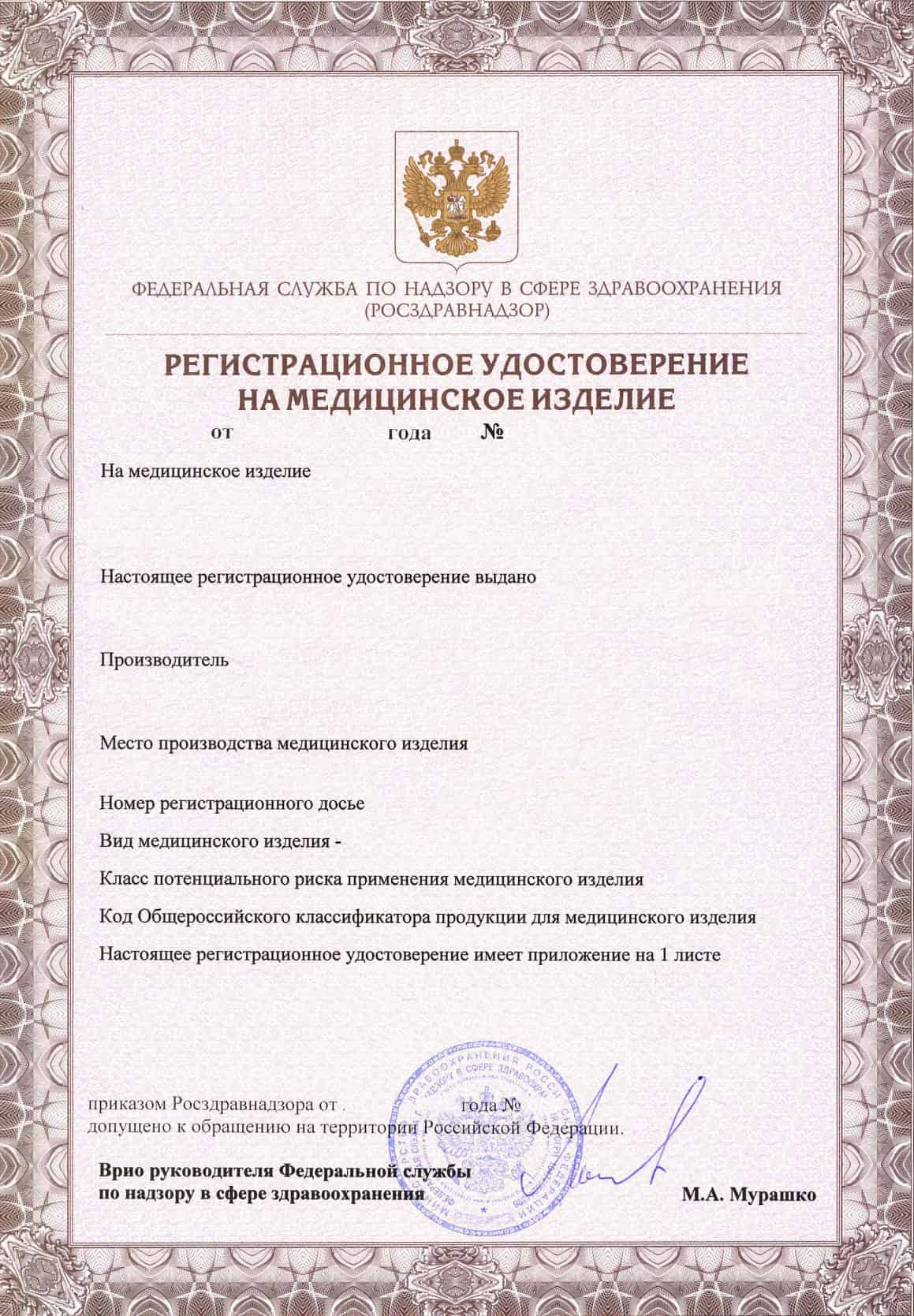
A registration certificate for a medical device is an official document issued by the Federal Service for Surveillance in Healthcare, Roszdravnadzor. It confirms that the medical device has passed the state registration procedure and may be legally circulated in Russia.
* The form of the registration certificate and the information included in it were approved by Roszdravnadzor Order No. 40-Pr/13 dated January 16, 2013.
Contents
- What is a medical device?
- When is registration required?
- Risk classes of medical devices
- Documents required for medical device registration
- Testing and clinical evidence
- State duty for medical device registration
- Medical device registration process in Roszdravnadzor
- Typical mistakes during registration
- Why companies choose CIRMI
- Cost and timeline of medical device registration
- Payment stages for registration services
- Liability for absence of a registration certificate
- How to start working with CIRMI
What is a medical device?
A medical device is not defined by its commercial name alone. In Russian regulatory practice, the decisive factor is the intended purpose of the product, how it is described by the manufacturer, how it is used, what effect it has and what evidence supports its safe and effective use. Instruments, apparatus, devices, equipment, materials, software and other products may all be treated as medical devices if they are intended for medical purposes.
Medical purposes may include diagnosis, prevention, monitoring, treatment, rehabilitation, replacement or modification of anatomical structures or physiological functions, examination of samples from the human body and other healthcare-related functions. A product may look like an ordinary technical product, cosmetic product, laboratory item or software solution, but still require medical device registration if its intended use falls within the regulatory definition.
This is why the first step in any registration project is not the preparation of forms, but correct qualification of the product. The expert must analyze the intended purpose, instructions for use, labeling, technical characteristics, composition, accessories, software functions, packaging, clinical context and similar products already registered in Russia.
When qualifying a product, we usually analyze:
- The intended purpose declared by the manufacturer;
- The medical claims used in instructions, labels, catalogues and commercial materials;
- The mechanism of action and whether the main effect is medical or non-medical;
- The contact with the human body, biological samples, tissues, blood or mucous membranes;
- The presence of software functions, measurement functions, accessories or consumables;
- The way similar products are registered and described in the Russian regulatory environment.
* The term medical device has been used in the current Russian regulatory framework since January 1, 2013. Older documents may still use terms such as medical equipment or medical-purpose products.
When is medical device registration required?
Registration is required when a product is intended to be circulated in Russia as a medical device. Circulation may include import, sale, transfer, installation, commissioning, use in healthcare organizations, participation in public tenders, demonstration as a regulated product and other forms of market activity.
For foreign manufacturers, registration is usually impossible without a properly appointed Russian applicant or authorized representative. For Russian manufacturers, the applicant normally acts directly through its legal entity. In both cases, the project should be built around the same central idea: the registration dossier must prove that the product, its documentation, testing results and clinical evidence correspond to the declared intended purpose and risk class.
Registration is usually required if the product is:
- Used for diagnosis, prevention, treatment, rehabilitation or medical monitoring;
- Supplied to hospitals, clinics, laboratories or healthcare professionals for medical use;
- Included in medical procedures, diagnostic workflows or patient care processes;
- Marketed with medical claims or intended medical functions;
- Software that performs medical calculations, diagnostic interpretation, monitoring or clinical decision support functions;
- An accessory necessary for the intended use of another medical device.
A common mistake is to look only at the product name or customs code. This is too superficial. The same type of product may be regulated differently depending on the claims, intended use, technical design, user group and evidence base. A correct registration strategy begins with careful qualification, not with mechanical document collection.
Strictly speaking: If a company plans to sell a product in Russia with medical claims, the question is not whether registration would be convenient. The question is whether the product can legally be placed on the market without it. In most serious medical projects, trying to postpone registration is not a saving strategy. It is a delayed risk.
Risk classes of medical devices
The risk class of a medical device is used to classify products according to the degree of potential risk associated with their use. The risk class affects the depth of expert review, the required testing scope, the clinical evidence route, the complexity of documentation and the total registration budget.
Russian classification includes four risk classes:
A medical device may be assigned only one risk class. If the product consists of several components and different components fall into different risk classes, the highest risk class normally determines the classification of the entire device. This is especially important for systems, sets, software-hardware complexes and products with accessories.
Risk class should not be guessed. Incorrect classification may lead to an incorrect testing route, wrong evidence package, unrealistic project cost and expert comments during registration. In practice, risk classification must be justified by the intended purpose, duration of contact with the body, invasiveness, energy source, measurement function, software impact and other regulatory criteria.
* To determine the risk class of your medical device, use our classification table or send a request to our expert department.
Documents required for medical device registration
To start a registration project, a minimum set of information is usually enough. It is not always necessary to have a complete dossier before the first expert review. In many projects, documents are collected, corrected, translated and developed step by step. The real issue is not the number of files, but their quality, consistency and regulatory usefulness.
A registration dossier must not be a random archive of documents. It must show a coherent picture: what the product is, who manufactures it, how it works, what risks it has, how it is tested, how it is used, what claims are made and why these claims are supported by evidence. CIRMI helps customers turn scattered manufacturer files into a structured Russian registration package.
→ For Russian medical device manufacturers
- Taxpayer identification number, primary state registration number and extract from the Russian Unified State Register of Legal Entities;
- Power of attorney from the applicant to a CIRMI expert for interaction with Roszdravnadzor in the interests of the applicant;
- ISO 13485 quality management system certificate from the manufacturer, if available;
- Technical documentation, if available;
- Information on product composition, materials, versions, configurations, accessories and packaging;
- Operating documentation for the medical device, including instructions for use or user manual, if available;
- Photos of the medical device, packaging, labeling and accessories, if available;
- Information about production site and production process, where relevant.
* If part of the technical or operating documentation is missing, our expert department can help develop it in the correct logic of a Russian registration project.
→ For foreign medical device manufacturers
- Legal documents of the manufacturer, for example a business license or company registration document;
- Available approval documents for the device, including certificates or declarations of conformity, if any;
- Power of attorney from the manufacturer to the authorized representative in Russia;
- Power of attorney from the authorized representative to a CIRMI expert for interaction with Roszdravnadzor;
- ISO 13485 quality management system certificate;
- Technical file for the medical device;
- Information on product composition and materials;
- Operating documentation for the device, if available;
- Photos of the medical device, packaging, labeling and accessories, if available;
- Information on the production site, manufacturing process and model range.
* If part of the documentation is missing or does not fit the Russian registration procedure, we help adapt and revise it for the project requirements.
Documents must work together, not separately
A beautiful technical file is useless if it contradicts the instructions for use. A test report is weak if it does not cover the real model range. A clinical assessment is vulnerable if it supports claims that are different from the registration dossier. This is why CIRMI treats documentation as one connected system. The aim is not to create a large folder. The aim is to create a dossier that can pass expert review.
Testing and clinical evidence for registration
Testing is one of the most sensitive parts of medical device registration. It is not enough to simply send a product sample to a laboratory. The testing program must correspond to the device type, intended use, risk class, materials, contact with the human body, measuring functions, safety requirements and the future structure of the registration dossier.
Depending on the product, the project may include technical testing, toxicological testing, software assessment, electrical safety evaluation, electromagnetic compatibility, sterilization validation, packaging assessment, biological safety assessment, usability-related review and other types of evidence. The exact route must be determined before the project budget and timeline are promised.
The evidence package may include:
- Technical testing to confirm characteristics, performance and safety indicators;
- Toxicological studies where materials contact the human body or require biological safety confirmation;
- Clinical trials or clinical evidence assessment depending on the product and registration route;
- Risk management documentation and justification of safety measures;
- Analysis of similar registered medical devices and available clinical data;
- Test reports, protocols, expert conclusions and supporting documents.
A frequent market mistake is to treat laboratory testing as a separate technical service unrelated to registration. This is wrong. A test report that does not support the declared intended use, model range, materials or technical documentation may become useless for registration. Therefore, testing must be planned together with the registration dossier, not after it.
* CIRMI does not simply transfer the customer to a laboratory. We help define the testing route, coordinate documentation logic and check whether the obtained results can actually support the registration procedure.
State duty for medical device registration
The amount of the state duty is established by Article 333.32.2 of the Tax Code of the Russian Federation and depends on the risk class of the medical device.
- Risk class 1 — RUB 72,000 for expert review and RUB 11,000 for the registration certificate form;
- Risk class 2a — RUB 104,000 for expert review and RUB 11,000 for the registration certificate form;
- Risk class 2b — RUB 136,000 for expert review and RUB 11,000 for the registration certificate form;
- Risk class 3 — RUB 184,000 for expert review and RUB 11,000 for the registration certificate form.
* The state duty for expert review and the registration certificate form is paid by the customer directly according to the official payment details of Roszdravnadzor. These costs are separate from CIRMI service fees and laboratory testing expenses.
Medical device registration process in Roszdravnadzor
The registration process should be treated as a controlled project, not as a one-time submission. Each stage affects the next one. If the intended use is described incorrectly, the testing route may become wrong. If the risk class is selected incorrectly, the budget and expert expectations will be distorted. If the technical file is weak, even successful testing may not save the project.
- We analyze the available technical and operating documentation, clarify the intended purpose and assess the initial project basis;
- We determine whether the product qualifies as a medical device under Russian regulatory logic;
- We determine the risk class of the medical device;
- We analyze the model range, versions, accessories, materials and configuration to define the correct registration scope;
- We develop missing technical and operating documentation or revise existing documents;
- If necessary, we communicate with the foreign manufacturer, Russian authorized representative or distributor;
- We organize translation of documentation into Russian, where required;
- We select testing laboratories and determine the required testing scope based on the specific product;
- We support technical and toxicological testing in accredited laboratories, where applicable;
- We prepare the documentation package and form the initial registration dossier;
- We obtain permission from Roszdravnadzor to conduct clinical trials if the selected route requires this stage;
- We organize clinical trials, clinical safety assessment or preparation of the clinical evidence package;
- We prepare responses and corrections if comments appear during the project;
- We submit the final documentation package to the expert organization for quality, safety and effectiveness review;
- We obtain the registration result and the decision to include the device in the state register;
- We transfer the registration certificate and the complete final documentation package to the customer.
* For easier understanding of the procedure, you may review our medical device registration timeline.
Typical mistakes during medical device registration in Russia
Many registration problems appear not because the product is weak, but because the project was incorrectly structured at the beginning. Russian medical device registration requires consistency. The product description, intended use, technical documentation, operating documentation, testing program, clinical evidence and registration dossier must support one another.
Common mistakes include:
- Starting the project without a proper analysis of whether the product is actually a medical device;
- Incorrect determination of risk class and registration route;
- Including too many models in one registration scope without proving their regulatory unity;
- Using technical documentation that was prepared for another jurisdiction without adaptation to Russian expectations;
- Weak connection between instructions for use, labeling, product description and testing results;
- Selecting laboratory tests mechanically, without understanding the final registration dossier;
- Underestimating clinical evidence requirements;
- Treating Roszdravnadzor communication as a formal administrative step rather than a regulated expert process;
- Building the budget without separating service fees, laboratory costs, translations, notarization and state duties.
A strong registration project is built in reverse from the expected expert review. The question is not “how to submit documents faster,” but “whether this dossier can survive expert analysis and lead to a valid registration result.” This is the difference between formal paperwork and real regulatory support.
CIRMI’s work is aimed exactly at this point. We act as the practical main assistant in the authorization process: we translate regulatory requirements into concrete project actions, identify weak points before they become official comments, and help the customer avoid the most expensive mistake — starting a registration route that was never properly checked.
Why companies choose CIRMI
CIRMI is not just a contractor that fills out forms. For many manufacturers and distributors, CIRMI becomes the central assistant in obtaining Russian authorization documents for medical devices. We connect the product, documentation, tests, clinical evidence, authorized representative and regulatory route into one manageable project.
We define the scope, stages and timelines for medical device registration services in the contract and follow them throughout the project. For the customer, this means a clear project route, transparent work logic and proper control over each stage.
Please note: some providers hide part of the work stages and mislead customers. They offer a low starting price and then increase the budget through unexpected revisions, new approvals and additional services that should have been assessed before the contract was signed.
Typical weak approach CIRMI approach Initial qualification The provider immediately quotes registration without analyzing whether the product, claims and intended use actually fit the declared route. We first qualify the product, intended use, risk class, evidence basis and registration route. This reduces the risk of choosing a wrong strategy at the very beginning. Expert qualification The project is often handled by sales managers or administrators without deep understanding of the device, its design and regulatory logic. The project is handled by specialized experts with medical, technical and regulatory background. We analyze the product, not just the files. Documentation logic Documents are prepared by template. The intended use, instructions, labeling, technical description and testing results may contradict one another. We build the documentation as a single evidence system. Key statements are aligned before expert review, not after receiving comments. Testing route The customer is simply redirected to a laboratory. The provider does not control whether the testing program supports the future registration dossier. We connect testing with the registration strategy. Test reports must support the declared product scope, intended use and evidence package. Clinical evidence Clinical evidence is treated as a formal report added at the end of the project. This creates risk if the evidence does not match the device claims. We assess the clinical route in connection with the device purpose, analogues, risk class, test results and expert expectations. Communication The customer has to coordinate the manufacturer, laboratory, translator, consultant and authorized representative almost independently. The customer receives a clear project route, a responsible coordinator and expert support. We keep the project logic in one working contour. Pricing A low entry price turns into additional charges for documentation, testing support, responses, translations and “unexpected” stages. We separate CIRMI service fees, laboratory costs, translations and state duties. The customer understands the budget structure before project launch. Risk management Weak projects are accepted without an honest discussion of problems. The customer buys hope instead of a real strategy. If the project has weak points, we identify them at the start. Our task is to build a realistic route and reduce preventable regulatory risks. Final result The provider focuses on formal submission and considers the job done once documents are sent somewhere. We focus on the registration result and the practical ability of the device to circulate legally on the Russian market.
Cost and timeline of medical device registration
Medical device registration is a project where the final cost depends on the product itself, the risk class, completeness of documentation, testing route, need for clinical evidence, number of models, accessories, materials and the quality of the existing technical file. Therefore, a responsible estimate cannot be made by looking only at the product name.
A low price without proper analysis is dangerous. It usually means that essential stages have not been calculated. Later, the customer may face additional invoices for technical documentation, translation, testing support, clinical evidence, responses to comments or correction of mistakes that could have been prevented at the beginning.
Indicative CIRMI service fees and timelines by risk class:
- Risk class 1 — From RUB 850,000 estimated timeline up to 6 months;
- Risk class 2a — From RUB 1,000,000 estimated timeline up to 8 months;
- Risk class 2b — From RUB 1,200,000 estimated timeline up to 9 months;
- Risk class 3 — From RUB 1,800,000 estimated timeline up to 12 months.
Additional expenses must be assessed separately:
- State duties paid to Roszdravnadzor;
- Laboratory testing costs paid directly according to laboratory invoices;
- Translation, notarization, legalization or apostille costs, where required;
- Clinical evidence preparation or clinical trial-related expenses, where applicable;
- Sample logistics, packaging, additional expert documents and corrections, if required by the project route.
* If some stages have already been completed and the documents are suitable for the Russian procedure, the project cost and timeline may be reduced.
Would you like to estimate the registration cost for your medical device? Use our online calculator. It is free and usually takes 1-2 minutes.
Payment stages for medical device registration services
A registration project includes several major stages, each requiring separate work, time and resources. For this reason, staged payment is usually more convenient and transparent than paying the full project budget at once.
Staged payment for CIRMI services
- 40% of the total amount is paid after signing the contract with CIRMI LLC;
- 30% is paid after development of the required documentation and before the start of technical and toxicological testing;
- 20% is paid after testing and before preparation of the clinical safety report or clinical evidence package;
- 10% is paid after obtaining the registration certificate or register entry result.
What is included in the total registration budget?
- CIRMI expert support and project management services;
- State duty for expert review and issuance of the registration certificate;
- Testing services in accredited laboratories;
- Translation and notarization of documents, where required;
- Additional expert reports or clinical evidence documents, where required by the registration route.
* Important: laboratory testing is usually paid by the customer directly according to laboratory invoices, and state duties are paid to Roszdravnadzor. During the project, we help select the indicators and standards relevant to your medical device.
Liability for absence of a registration certificate
Medical device registration is mandatory under Russian law. Absence of a registration certificate may lead to serious legal consequences. Sale or other circulation of medical devices without the required authorization documents may result in significant fines, restrictions on circulation of the product and, in certain cases, criminal liability.
For business, the risk is not limited to formal penalties. Lack of registration may block customs clearance, disrupt supplies, make participation in tenders impossible, create problems with distributors and damage relations with medical organizations. If a product is already being promoted or sold as a medical device without registration, the risk level becomes even higher.
Practical business risks include:
- Customs and import delays;
- Refusal of distributors or hospitals to work with the product;
- Inability to participate in tenders and procurement procedures;
- Claims from supervisory authorities or counterparties;
- Loss of time while competitors with registered products enter the market faster;
- Reputational damage for the manufacturer, importer or authorized representative.
How to start working with CIRMI
To start properly, do not send only a short message like “Please register our medical device in Russia.” That is not enough for a serious assessment. The first step is to understand the product, its intended use, model range, technical documentation, risk class, existing evidence and commercial goal in Russia.
For an initial assessment, please provide:
- Product name, intended purpose and brief description;
- Model list, configurations, accessories and consumables;
- Instructions for use, user manual, technical file or product catalogue, if available;
- Information about materials, body contact, sterility, software and measuring functions;
- Existing certificates, declarations, test reports, clinical data and ISO 13485 certificate, if available;
- Information about the manufacturer, production site and intended applicant or authorized representative in Russia;
- Your target market goal: Russia only or Russia plus other EAEU countries;
- Expected timeline, budget limitations and current project status.
After reviewing the information, CIRMI experts will determine whether the product falls under Russian medical device regulation, what risk class and registration route are likely, which documents and tests may be required, what risks should be considered and what budget and timeline range is realistic. You may send an online request or contact our expert department directly.
Since 2011, the expert department of CIRMI has been professionally supporting medical device registration projects in Russia. Over this period, we have studied the practical side of the procedure, typical market mistakes and real reasons why even a strong product may get stuck at the documentation, testing or expert review stage. Due to a systematic approach, strong internal expertise and attention to detail, CIRMI manages registration projects from the initial assessment to the final register result.
Accurate
registration
routeWe define the workable project route from the start and help the customer avoid months lost on weak qualification, unnecessary stages and wrong decisions.
Strong
registration
packageWe build the documentation so that it can withstand testing, expert review and the overall regulatory logic, instead of falling apart at the first serious question.
Project
control until
resultWe support the project until the final result, control stages, documents, responses and timelines, and do not disappear after submission.
Your advantages when working with CIRMI:
Accurate qualification of the device and route
We do not start the project with attractive promises and generic estimates. First, we analyze the device itself, its intended purpose, composition, risk class, evidence base and the overall registration route. This approach helps build a real working strategy, not a convenient sales story.
Honest assessment of timeline, risks and budget
We explain in advance where the project is truly complex, which stages are mandatory, where revisions may be needed and what affects the final cost. The customer understands the process before facing unexpected testing, extra charges or delays.
Strong connection between documents and testing
We build the project as a single system where documentation, testing, clinical logic and registration dossier do not conflict with each other. This reduces the risk of objections, weak test reports and delays during expert review.
Result, not formal submission
CIRMI does not work just to say that a package has been submitted somewhere. Our task is to help the medical device pass the procedure properly and obtain a real legal basis for lawful circulation on the Russian market.
Support for foreign and Russian manufacturers
We work with Russian manufacturers, foreign manufacturers, exporters, importers, distributors and authorized representatives. The project logic is adapted to the real structure of the manufacturer, documentation source, production site and future applicant in Russia.
Transparent project management
The customer receives a clear understanding of the current stage, next actions, responsible persons and possible risks. Registration becomes a managed project instead of a confusing chain of disconnected documents, laboratories and regulatory steps.
Changes to the Registration Certificate for a Medical Device
Changes to the registration certificate for a medical device are an official procedure used to update information reflected directly in the Roszdravnadzor registration certificate or in its annex. This is not a full re-registration of the medical device and not a complete reconstruction of the registration dossier. It is a targeted regulatory procedure for correcting specific information in an already issued and valid authorization document.
For business, this procedure is just as important as the initial registration itself. If the registration certificate contains outdated information about the applicant, certificate holder, production address, device name or other official data, the company faces a direct legal and commercial risk. The product may remain physically the same, but the authorization document no longer reflects the actual legal or factual situation.
CIRMI acts as the main practical assistant for companies that need to obtain, maintain and update authorization documents for medical devices in Russia. We do not treat certificate changes as a mechanical filing service. First we determine whether the case really belongs to the registration certificate change route, then we prepare the documents, remove contradictions and support the project until the final result.
The current procedure for state registration of medical devices and related changes is based on Resolution of the Government of the Russian Federation No. 1684 dated November 30, 2024. This is the procedure that should be used when assessing whether a case may be handled as a change to the registration certificate, whether it requires changes to the registration dossier, or whether a new registration route is more appropriate.
* Older references to Resolution of the Government of the Russian Federation No. 1416 may still appear in practice and on outdated pages. For current projects and actual assessment of changes, the current procedure must be used.
Certificate changes and dossier changes are not the same procedure
Registration certificate changes usually concern the information shown in the registration certificate itself or in its annex. This may include official data on the applicant, certificate holder, production address, device name or other information that appears in the authorization document.
Registration dossier changes concern the documents contained in the registration dossier of the medical device. This is usually a deeper procedure involving technical documentation, operating documents, evidence, test reports and, in some cases, expert review.
In practice, customers often confuse these routes. That is a serious mistake. Some changes may indeed be closed through a certificate change procedure. Other cases already require changes to the registration dossier. Some projects are so deep that trying to preserve the old route becomes inefficient, and a new registration may be safer and more predictable.
Contents
- When certificate changes are needed, when dossier changes are required and when new registration is better
- Grounds for changes to the registration certificate
- Documents required for making changes
- Process of making changes to the registration certificate
- Typical example of a certificate change case
- Common mistakes during certificate change projects
- Why companies choose CIRMI
- Cost and timeline for changes to the registration certificate
- Liability for untimely update of registration information
When certificate changes are needed, when dossier changes are required and when new registration is better
Correct qualification of the change is the main issue at the start of the project. This is where many companies make the expensive mistake. If the route is too light, the project may lose time because of comments, returns and repeated document preparation. If the route is too heavy, the customer pays more and waits longer without a real regulatory reason.
A certificate change route is suitable only when the issue is genuinely connected with information reflected in the registration certificate or its annex. It is not a universal solution for every update. If the medical device itself, its technical characteristics, composition, materials, configuration, intended purpose or evidence base changes, the situation may move beyond the limits of a simple registration certificate update.
Registration certificate changes are usually suitable if:
- Information about the applicant or registration certificate holder changes;
- The production address reflected in the registration certificate changes;
- The name of the medical device changes without changing its properties, characteristics or operating principle;
- It is necessary to specify or correct the type of medical device according to the nomenclature classification, where this is acceptable in the specific case;
- The change concerns official certificate information and does not require rebuilding the evidence base.
Registration dossier changes are usually required if:
- The design, composition, material, configuration or versions of the device change;
- Technical or operating documentation is updated in substance, not only formally;
- The change may affect the quality, effectiveness or safety of the device;
- The change requires a supporting evidence base, testing or expert review;
- The product documentation no longer corresponds to the materials contained in the registration dossier.
A new registration may be more reasonable if:
- The change significantly alters the medical device and its regulatory logic;
- The old dossier no longer corresponds to the actual product and patching it becomes inefficient;
- The volume of document and evidence corrections is already comparable to a new registration project;
- Trying to preserve the old route only wastes months and eventually leads to a more complex procedure anyway.
* A weak decision is to change the device or documents first and then try to legalize the situation retroactively. A strong decision is to qualify the change first and only then launch the legal, production and documentation route.
Grounds for changes to the registration certificate
Changes to the registration certificate are not used for any and all corrections. They apply to specific cases where information in the valid registration certificate must be updated without moving into a deep reconstruction of the registration dossier. Below are the most common grounds encountered by applicants, registration certificate holders and authorized representatives.
- Change in information about the applicant or registration certificate holder, including reorganization of a legal entity, change of full or abbreviated company name, change of registered address, and for an individual entrepreneur, change of full name, residential address or identity document details;
- Change in the address of the medical device production site, provided that the device itself, its properties and regulatory logic do not change;
- Change in the name of the medical device, provided that its properties, characteristics, functional purpose and operating principle are not affected;
- Specification or correction of the type of medical device according to the nomenclature classification, where this is permitted within the specific registration case;
- Other related changes in certificate information, provided that they do not move the project into evidence base correction or registration dossier changes.
The most dangerous mistake is to judge the route by the everyday wording of the problem. For example, the phrase “we only changed the name” may hide two completely different situations. In the first case, the product name changes while the device remains the same. In the second case, the name changes because the manufacturer has actually changed the device, its composition, function or model range. The first situation may be suitable for certificate changes. The second one may already require dossier changes or a new registration route.
* For many other cases, the issue is not a registration certificate change but a registration dossier change. To avoid choosing the wrong route, the case should first be assessed by substance, not by the customer’s initial wording.
Documents required for making changes
A strong certificate change project requires more than a formal application. It requires a document package that logically confirms the basis of the change and does not create contradictions between the registration certificate, the applicant’s information, manufacturer documents and supporting materials. The cleaner this package is, the lower the risk of losing time on clarifications, returns and repeated preparation.
The basic package usually includes:
- Application for changes to the registration certificate;
- Current registration and corporate information of the applicant, including, where necessary, an extract from the Unified State Register of Legal Entities;
- Documents confirming the authority of the authorized representative, if the project is handled through such representative;
- Registration dossier number and information on the current registration certificate;
- Documents confirming the specific basis for the change, such as reorganization, name change, address change, production site change or other official update;
- If the medical device name changes, updated technical and operating documents brought into line with the new name;
- Photos, layouts, document inventory and other materials, if required by the logic of the specific case;
- Explanatory letter confirming that the change relates to certificate information and does not affect the device properties, characteristics, quality, effectiveness or safety, where such confirmation is appropriate;
- Translations and notarized documents, if foreign manufacturer documents are involved.
There is no universal list suitable for every case. The final package depends on the legal basis of the change, the structure of the manufacturer, the certificate holder, the country of production, the current registration certificate, the annex and the available supporting documents. A template approach is dangerous because it ignores the difference between a simple correction and a change that affects the device or its evidence base.
* One of the main signs of a weak provider is the promise to handle certificate changes by template without analyzing the actual basis and document package. This is exactly how simple projects turn into avoidable problems.
Process of making changes to the registration certificate
In theory, the procedure may seem simple because the registration certificate is only one document. In practice, the weak point is almost never the application itself. The weak point is incorrect qualification of the change, incomplete supporting documents and contradictions between old and new information.
- We analyze the initial documents and determine whether the case really belongs to registration certificate changes, not dossier changes or new registration;
- We collect supporting documents for the basis of the change and check whether there are contradictions between old and new information;
- We prepare the application, inventory and supporting materials for submission to Roszdravnadzor;
- If necessary, we revise product and applicant documents so that they correspond to the logic of the intended change;
- We prepare explanations confirming the nature of the change and the absence of impact on the medical device, where this is needed;
- We support submission and review of the project, including responses to notifications, comments and requests from the regulator;
- We obtain the updated registration certificate or the final decision under the procedure and transfer the updated materials to the customer.
A certificate change project is often faster than a full registration project, but only if the case has been correctly qualified from the start. If a deeper change is hidden under the appearance of a simple certificate correction, the project may move into dossier changes, expert review or even a new registration route.
* The estimated timeline for a simple certificate change procedure is usually about 1 month, but the actual timeline depends on the quality of initial documents, completeness of the package and the nature of the change.
Typical example of a certificate change case
Assume that the Russian applicant indicated in the registration certificate has changed its legal address. The medical device itself has not changed. Its properties, characteristics, intended purpose, production technology and evidence base remain the same. However, the information in the valid registration certificate no longer corresponds to the actual legal information of the company.
In such a case, the issue should not be closed by an internal certificate or a letter placed in the company archive. The information in the authorization document must be updated through the official procedure with Roszdravnadzor. Otherwise, the company may later face questions during supply, tenders, inspections or interaction with distributors and medical organizations.
- An Application for changes is prepared with the relevant basis;
- Current information about the applicant is collected to confirm the address change;
- An Inventory of submitted documents is prepared;
- Additional explanations are prepared, if necessary, to confirm that the change concerns registration information and not the medical device itself;
- The package is submitted to Roszdravnadzor and supported during review;
- As a result, the applicant receives an updated registration certificate or final decision under the procedure.
* This is only one typical scenario. In a real project, the document package depends on what exactly changes and whether the case actually remains within the certificate change route.
Common mistakes during certificate change projects
Most failures in certificate change projects start with a wrong assumption: the customer or provider thinks that the case is simple because only one line in the certificate needs to be changed. In reality, the line in the certificate may be connected with corporate documents, manufacturer documents, production site information, the annex, the registration dossier and the product documentation.
Common mistakes include:
- Treating every request as a simple registration certificate change without checking whether the case actually requires dossier changes;
- Changing the device name while ignoring whether the product itself, its characteristics or intended purpose have changed;
- Submitting only a formal application without sufficient supporting documents;
- Using corporate documents that do not match the current registration certificate information;
- Failing to prove that the production address change does not affect the device and its regulatory status;
- Ignoring contradictions between the registration certificate, annex, technical documentation and operating documentation;
- Underestimating the possibility that the case may require a heavier route;
- Choosing a provider based only on the lowest starting price, without checking whether the route is legally correct.
The correct approach is different: first qualify the change, then prepare the package. If this order is reversed, the customer usually pays for the illusion of speed and later loses time on comments, corrections and re-submission.
Why companies choose CIRMI
The main market mistake in registration certificate change projects is that such work is often sold as an elementary service without real analysis. At the beginning it looks attractive: fast, cheap and simple. Later the customer suddenly learns that the case actually requires another procedure, additional documents, a different evidence logic or a different budget.
CIRMI is the practical expert assistant that helps companies keep medical device authorization documents current and legally usable. We do not sell a comfortable legend. We check the substance of the case and build the route that has a real chance of reaching the result.
Please note: weak providers often promise to make certificate changes quickly and cheaply before a proper review of the situation. As a result, the customer is first sold a convenient story, and then receives explanations that a heavier route, additional documents, package revision or even new registration is required. This is where the market most often loses both money and time.
Typical weak approach CIRMI approach Qualification of the change Any request is accepted as a simple certificate change and an easy submission is promised without detailed analysis. The mistake appears after the project starts. We first determine whether the case really belongs to certificate changes, whether it moves into dossier changes and whether new registration would be safer. Document approach The provider limits the work to a formal application and hopes that the rest will pass somehow. The customer receives requests, returns and wasted time. We prepare the package so that the change is supported by documents and looks logical for the regulator, without gaps that later have to be closed in a hurry. Risk assessment The provider rarely explains where a simple certificate change ends and a heavier procedure begins. The customer buys hope instead of strategy. We show the real boundary between certificate changes, dossier changes and new registration. This makes the risk, timeline and financial logic clear from the start. Customer communication After the start, the customer does not clearly understand what is happening, why the timeline shifts and what documents are still required. The customer has a clear route, a team and project logic. We explain the current stage, next steps and real bottlenecks. Budget transparency A reduced starting price is announced, and then everything else is added later: revisions, explanations, new documents and additional stages. We explain in advance what affects the cost and when the project may move into another route. No tricks that usually benefit only the seller of the procedure. Focus on result The provider limits the work to formal submission and considers the job completed. The customer is left to handle the consequences alone. Our task is not simply to submit papers, but to bring the case to a working result. We support the project until completion and do not disappear after filing.
Cost and timeline for changes to the registration certificate
The cost of making changes to the registration certificate depends less on the risk class and more on the actual scope of work, the basis of the change, the quality of initial documents and whether the case remains within a simple certificate change route. If the case moves into dossier changes or a new registration route, both the budget and timeline change accordingly.
Indicative CIRMI service fees and timelines by risk class:
- Risk class 1 — from RUB 70,000, estimated timeline about 1 month;
- Risk class 2a — from RUB 80,000, estimated timeline about 1 month;
- Risk class 2b — from RUB 90,000, estimated timeline about 1 month;
- Risk class 3 — from RUB 100,000, estimated timeline about 1 month.
State duty
- For changes to documents contained in the registration dossier of a medical device, where expert review is not required, the Tax Code of the Russian Federation establishes a state duty of RUB 2,500;
- For issuance of a duplicate registration certificate for a medical device, the Tax Code of the Russian Federation also establishes a state duty of RUB 2,500;
- For related certificate change cases, the correct state duty should be confirmed after qualification of the specific basis, so that one procedure is not incorrectly replaced with another.
* If the case truly belongs to a simple certificate change route and the initial documents are in order, the project is usually completed faster and at a lower cost. If a deeper change is hidden under the appearance of a certificate change, the cost and timeline naturally increase because the procedure itself changes.
To receive a realistic estimate for your case, send a request or provide the initial documents for preliminary analysis. We will honestly tell you whether it is a certificate change, dossier change or a new registration route.
Liability for untimely update of registration information
The registration certificate and the information connected with it must correspond to the actual status of the medical device, applicant and conditions of circulation. If a medical device is circulated on the market while the registration information is already outdated, the registration document holder faces a direct legal and commercial risk.
In practice, this may lead to inspection comments, fines, public procurement problems, claims from partners and questions regarding the lawful circulation of the medical device. The most dangerous situation is when a company considers the change formal and postpones it for months, while in documents the product or certificate holder already lives a different legal life.
Depending on the specific situation, Articles 6.28 and 6.33 of the Code of Administrative Offences of the Russian Federation and Article 238.1 of the Criminal Code of the Russian Federation may apply.
The correct approach is simple: if the information in the registration certificate no longer reflects the actual legal or factual situation, the issue should be assessed immediately. Waiting until a tender, inspection or distributor audit exposes the inconsistency is not a strategy. It is avoidable damage.
Since 2011, the expert department of CIRMI has professionally supported projects related to updating registration information for medical devices in Russia. During this time, we have studied where the market most often confuses registration certificate changes with dossier changes and where customers are sold an overly light route that later collapses. Due to a systematic approach, strong internal expertise and attention to detail, CIRMI confidently supports registration certificate change projects until a practical result is achieved.
Accurate
certificate change
qualificationWe immediately separate certificate changes from dossier changes and do not let the customer lose time on a wrong procedure and false expectations.
Strong
certificate change
packageWe prepare documents so that the change looks logical, clean and convincing for the regulator, without unnecessary gaps and contradictions.
Project
control until
resultWe support the project until the registration certificate is updated, control the package, responses and timeline, and do not disappear after filing the application.
Your advantages when working with CIRMI:
We do not sell certificate changes where another route is needed
We do not call every request a simple registration certificate change just because it is easier to sign the customer. First we check whether the change truly concerns the certificate, not the dossier or new registration.
We clearly assess risks and procedure boundaries
We explain in advance where the light route ends and a more complex case begins with additional documents, evidence or another procedure. This saves the customer months of unnecessary work.
We prepare the package without formalism
In certificate change projects, the weak point is usually not the application, but inconsistencies between old and new information. We remove such risks before submission, so the package does not have to be rebuilt after comments.
We work for the final result, not for visible activity
CIRMI does not stop at formal document submission. Our task is for the customer to receive an updated registration certificate and not return to the same problem again after several weeks.
We act as your regulatory support department in Russia
For foreign and Russian manufacturers, distributors and authorized representatives, CIRMI works as a practical expert partner. We help maintain the legal usability of authorization documents and reduce the risk of outdated registration information.
Changes to the Registration Dossier for a Medical Device
Changes to the registration dossier for a medical device are an official regulatory procedure used to update the documents and information contained in the registration dossier of an already registered medical device. This procedure is needed when the medical device, its documentation, model range, accessories, materials, packaging, labeling, technical file, instructions for use, software version, evidence package or other registration materials no longer fully correspond to the information previously submitted and accepted during state registration.
For a manufacturer, distributor, importer or Russian authorized representative, dossier changes are not a minor administrative formality. They are a way to keep the registration basis legally usable after the product has changed. If the product is already different, but the registration dossier remains old, the company may face problems during import, public procurement, hospital supply, distributor audits, market surveillance, Roszdravnadzor review or internal compliance checks.
CIRMI acts as the main practical assistant for companies that need to maintain, update and protect authorization documents for medical devices in Russia. We do not treat dossier changes as a mechanical replacement of several pages. First, we determine what exactly has changed, whether the change affects quality, effectiveness or safety, whether expert review is required, and only after that we build the correct regulatory route.
The current procedure for state registration of medical devices and changes to documents contained in the registration dossier is based on Resolution of the Government of the Russian Federation No. 1684 dated November 30, 2024. This procedure separates changes that do not require expert review of quality, effectiveness and safety from changes that do require such expert review.
* Older materials may still refer to Resolution of the Government of the Russian Federation No. 1416. However, new projects and current assessment of registration dossier changes should be planned under the applicable rules. Using an outdated route is a weak strategy that may distort the budget, timeline and evidence requirements.
Dossier changes and certificate changes are not the same procedure
Registration dossier changes concern the documents contained in the registration dossier of the medical device. These documents may include technical documentation, operating documentation, test reports, clinical evidence, risk information, model lists, accessories, labeling, packaging materials and other materials that support the registered status of the device.
Registration certificate changes usually concern the information reflected directly in the registration certificate or its annex, for example applicant data, production address, certificate holder information, device name or other official certificate details.
Customers often confuse these procedures. That is a dangerous mistake. A change that looks small in everyday language may affect the product, evidence package or safety logic. In such a case, trying to handle it as a simple certificate update may lead to comments, delays, additional testing and a complete change of route after time and money have already been spent.
Contents
- When registration dossier changes are required
- Grounds for changes to the registration dossier
- Changes that may be made without expert review
- Changes requiring expert review
- Documents required for making dossier changes
- Testing and evidence for dossier changes
- Process of making changes to the registration dossier
- Typical examples of dossier change cases
- Common mistakes during dossier change projects
- Why companies choose CIRMI
- Cost and timeline for registration dossier changes
- Risks of an outdated registration dossier
When registration dossier changes are required
Changes to the registration dossier are required when the information contained in the registration materials no longer reflects the actual medical device, its documentation, configuration or conditions of circulation. The key question is not whether the manufacturer considers the change small. The key question is whether the change has regulatory significance for the already registered medical device.
A product may remain visually similar and still require dossier changes. For example, a material may be replaced, a software version may be updated, an accessory may be added, a packaging system may be changed, technical specifications may be revised, or the instructions for use may receive new warnings. Each of these changes may affect the registration dossier and may require official updating.
Registration dossier changes are usually required if:
- The design, composition, configuration or material of the medical device changes;
- The model range, versions, accessories or components are added, removed or renamed;
- Technical documentation, specifications, standards, drawings or verification documents are updated;
- Operating documentation, instructions for use, labels, packaging or warnings are changed;
- Software version, software functionality or software documentation is updated;
- The change may affect quality, effectiveness, safety, performance, risk management or the evidence base;
- The current dossier can no longer clearly support the product that is actually imported, sold or used in Russia.
The procedure may not be required if:
- The change is purely internal and does not affect registration documents or certificate information;
- The manufacturer is only discussing a future change and no final documentation has been approved yet;
- The change does not concern the registered device, its documents, its evidence package or its conditions of use;
- The matter belongs to another procedure, for example a registration certificate change or a new registration route.
* The weakest strategy is to change the product first and think about the Russian dossier later. The correct strategy is to qualify the change before the updated product enters the market or before the updated documents are used in supply, tenders or inspections.
Grounds for changes to the registration dossier
The grounds for making changes to the registration dossier depend on what exactly has changed and whether this change affects the medical device, its evidence base or its regulatory status. A proper assessment cannot be made only by the customer’s short description. The old dossier, the updated documents, the registration certificate, annexes, test reports and real product configuration must be reviewed together.
- Change in the design of the medical device, if its properties, characteristics, performance or use conditions change;
- Addition, removal or replacement of materials used in the device or its individual parts;
- Change in accessories, components, configurations, kits or execution options listed in the dossier or certificate annex;
- Addition or exclusion of models, versions, specifications or variants of the medical device;
- Change in names of accessories, components, versions or documents included in the registration materials;
- Change in labeling, packaging, labels, color layouts, instructions for use, user manuals or other operating materials;
- Change in technical documentation, standards, test methods, control methods, specifications or referenced documents;
- Change in shelf life, storage conditions, transportation conditions, sterilization status or other significant product characteristics;
- Change in software version, software architecture, interface, algorithms or functions that may affect use of the device;
- Change in risk management documentation, clinical evidence, biological safety evidence or test reports;
- Any other change that affects or may affect the quality, effectiveness or safety of the medical device.
Two changes that sound similar may require different routes. A document title correction may be simple. A correction that hides a new material, new function, new model or new clinical claim may be a completely different story. This is why dossier changes must be qualified by experts who understand both regulatory documents and the device itself.
* A formal list of grounds is not enough. The decisive question is whether the existing evidence still supports the changed device. If the answer is no, the project may require expert review, additional testing or a broader regulatory route.
Changes that may be made without expert review
Some changes to the registration dossier may be made without expert review of quality, effectiveness and safety. This route is used when the changes do not affect the medical device in a way that requires re-evaluation. In simple words, the dossier is updated, but the device itself, its safety profile, intended use, risk class and evidence basis remain stable.
This route may be considered when the change:
- Does not affect the quality, effectiveness or safety of the medical device;
- Does not change the intended purpose, operating principle or essential performance characteristics;
- Concerns document clarification, version update or structural adjustment without changing the device itself;
- Updates non-critical descriptions, terminology, formatting or references while preserving the regulatory meaning;
- Does not require new technical, toxicological, clinical or other evidence to support the registered product.
Important: “Without expert review” does not mean “without preparation.” The applicant still needs a clear application, document inventory, updated materials, justification of the change and evidence that the change does not affect the medical device in a way that requires a deeper route.
* The phrase “it is only a small update” is not a regulatory argument. The route must be justified by documents, not by the manufacturer’s internal opinion.
Changes requiring expert review
If the change may affect the quality, effectiveness or safety of the medical device, the procedure becomes more serious. In this case, a simple document update is not enough. The project may require expert review and, depending on the device, additional technical testing, toxicological studies, clinical evidence, software assessment, risk documentation or other proof.
Expert review is usually required when the change:
- Affects device design, operating principle, technical characteristics or performance;
- Affects materials that contact the human body or influence biological safety;
- Affects sterilization, packaging, shelf life, transportation or storage conditions;
- Adds new models, accessories, versions or software functions that are not covered by the existing evidence;
- Changes intended use, indications, user group, limitations, contraindications or clinical claims;
- Requires new testing, additional reports or expert justification to confirm safety and effectiveness;
- Makes the current registration dossier insufficient for supporting the updated product.
Correct approach: before preparing the application, the project team should build a change comparison: what existed before, what exists now, why the change appeared and whether the old evidence still covers the updated device. If the evidence is insufficient, testing and expert materials should be planned before submission, not after receiving negative comments.
* The most expensive mistake is to package a substantive product change as a simple administrative update. This does not save money. It only postpones the problem until review, inspection or market use.
Documents required for making dossier changes
A strong dossier change project requires more than a formal application and several updated pages. The document package must explain what changed, why it changed, how the change affects the medical device and what documents prove that the updated device remains safe, effective and compliant with the registration basis.
The final list of documents depends on the device type, risk class, registration history, country of manufacture, current certificate, annex, existing dossier and nature of the change. However, most projects include a common core set of materials.
The basic package usually includes:
- Application for changes to documents contained in the registration dossier;
- Document inventory for submission to the registration authority;
- Current Roszdravnadzor registration certificate and annexes;
- Current version of the registration dossier documents affected by the change;
- Updated technical documentation, operating documentation, instructions for use, labels, packaging layouts or specifications;
- Change description explaining the previous version, the new version and the reason for the update;
- Comparison table showing each change and its impact on quality, effectiveness and safety;
- Manufacturer confirmation letters, where appropriate;
- Risk management materials, validation reports, test reports or expert materials, if the change requires evidence;
- Translations into Russian and notarized documents, if foreign documents are involved;
- Confirmation of state duty payment, where applicable;
- Power of attorney documents for interaction with Roszdravnadzor, if the project is handled through an authorized representative or expert.
For foreign manufacturers, it is usually important to provide:
- Legal documents of the manufacturer, for example a business license or company registration document;
- Documents confirming the relationship with the Russian authorized representative;
- Technical file, instructions for use, labeling and model information in the updated version;
- ISO 13485 quality management system certificate, where applicable;
- Evidence confirming that the change does not negatively affect the product, or materials proving the updated safety and performance profile;
- A clear explanation of the change in a format suitable for Russian regulatory review.
* A large number of files does not mean a strong package. A strong package is one where the change is understandable, justified and supported by evidence without internal contradictions.
Testing and evidence for dossier changes
Testing is not required for every dossier change, but when the change affects the device, the existing evidence may no longer be sufficient. This is especially important when changes concern materials, biological contact, electrical characteristics, software, measurement functions, accessories, sterilization, packaging, shelf life or clinical claims.
Depending on the case, the evidence package may include:
- Technical testing confirming that the updated device meets declared characteristics and safety indicators;
- Toxicological studies if materials or contact with the human body are affected;
- Clinical evidence or clinical safety materials if the change affects clinical use, indications or expected performance;
- Software validation materials and cybersecurity-related documentation, where applicable;
- Risk analysis and justification that risks remain controlled after the change;
- Sterilization validation, packaging validation or shelf-life justification, where relevant;
- Comparison with previously registered versions and explanation of why the existing evidence remains sufficient or why new evidence is required.
A common weak approach is to send the customer to a laboratory without understanding what the test report must prove. This is not proper regulatory work. Testing must be connected with the dossier logic. If the test report does not cover the changed product, model range, material or intended use, it may not solve the registration problem.
* CIRMI helps determine whether testing is really needed and what exactly the evidence must prove. Otherwise, the customer may pay for reports that do not support the dossier change route.
Process of making changes to the registration dossier
The procedure should be treated as a controlled regulatory project. The sequence matters. If the change is qualified incorrectly, the entire package may be built on a weak foundation. If the evidence is selected incorrectly, the dossier may not withstand expert review. If the updated documents conflict with the old registration materials, the project may receive comments that could have been prevented.
- We collect and analyze the existing registration certificate, annexes, technical documentation, operating documentation and current dossier materials;
- We determine what exactly has changed and whether the case concerns the dossier, the registration certificate or both blocks at the same time;
- We prepare a change comparison showing the previous and updated versions of the relevant materials;
- We assess whether the change affects the quality, effectiveness or safety of the medical device;
- We determine whether expert review, testing, research or additional evidence is required;
- We develop or revise technical documentation, operating documentation, labels, packaging layouts and explanatory materials;
- We organize translation into Russian and align terminology, models, accessories, materials and descriptions;
- Where required, we coordinate testing, expert reports, clinical materials or other supporting evidence;
- We prepare the application, document inventory, explanatory letters and complete package for submission;
- We support the submission and review process, including responses to notifications, comments and requests;
- We obtain the final result under the procedure and check whether the updated dossier can be used safely in real business practice;
- We transfer the updated documentation package to the customer and explain how the updated registration materials should be used further.
On paper, dossier changes may look like a document update. In reality, the difficulty is not in filling out an application. The real difficulty is qualifying the change, building a coherent evidence package and preventing contradictions between the old dossier, updated documents and actual product configuration.
* The process is formed individually for each project. The product type, risk class, country of manufacture, scope of change and need for expert review directly affect the route, timeline and budget.
Typical examples of dossier change cases
The most common dossier change cases appear when the product has been updated after registration, but the Russian dossier still describes the older version. This gap may remain invisible for some time, but it usually becomes a problem during import, supply, tender participation, distributor review or market control.
Example 1: Change in material
A manufacturer replaces one material used in a patient-contacting component. The appearance of the device may remain the same, but the biological safety and toxicological logic may change. In this case, the old dossier may no longer support the updated device without additional justification or testing.
- The old and new material data must be compared;
- Biological safety and toxicological evidence must be assessed;
- Technical and operating documentation must be updated consistently;
- The route must be assessed for expert review and possible additional testing.
Example 2: Addition of new models or accessories
A manufacturer wants to add new models, accessories or configurations. Sales teams often treat this as a commercial extension. Regulatory review is stricter. It must be determined whether the existing registration certificate, test reports, technical documentation and instructions already cover the new versions.
- The model range must be checked against the certificate and annex;
- The existing evidence must be checked for coverage of the added versions;
- The technical file and instructions must be aligned with the expanded scope;
- If coverage is insufficient, additional testing or expert materials may be required.
Example 3: Software update
If software is updated only technically and does not affect medical functions, the route may be relatively simple. If the update changes algorithms, decision support, measurement logic, user interface, data processing or clinical interpretation, the change may affect safety and effectiveness. In such cases, software documentation, validation and risk analysis become critical.
* The same phrase “we updated the product” can mean a minor document correction or a regulatory project requiring expert review. The difference is found only through real analysis, not through guessing.
Common mistakes during dossier change projects
Most problems in dossier change projects begin before submission. The customer or provider underestimates the regulatory meaning of the change, selects the wrong procedure and starts preparing documents without understanding what the updated dossier must prove.
Common mistakes include:
- Treating a substantive product change as a simple document update;
- Confusing registration dossier changes with registration certificate changes;
- Submitting updated documents without a clear comparison of old and new versions;
- Failing to assess whether the change affects quality, effectiveness or safety;
- Ignoring the need for additional testing, validation or clinical evidence;
- Using documents translated from another jurisdiction without adapting them to Russian dossier logic;
- Creating contradictions between the certificate, annex, technical file, instructions, labeling and test reports;
- Choosing the cheapest provider and later paying for corrections, repeated testing and route revision;
- Delaying dossier update until an inspection, tender, import issue or customer audit exposes the inconsistency.
The correct approach is simple but strict: first qualify the change, then build the route, then prepare documents. If the order is reversed, the project usually becomes chaotic. The customer receives requests, explanations, new costs and delays that could have been prevented at the beginning.
* Dossier changes are not an after-sales clerical service. They directly affect whether the registration basis continues to cover the product that is actually placed on the Russian market.
Why companies choose CIRMI
In dossier change projects, the main value is not only document preparation. The main value is correct regulatory qualification of the change. A weak provider simply asks the customer for updated files and submits them. A strong provider first determines whether the change can be accepted by the existing registration basis and what evidence is needed to support it.
CIRMI is the practical expert assistant that helps companies keep medical device authorization documents valid, current and usable in real business situations. Our task is not to create the appearance of regulatory activity. Our task is to help the customer update the dossier in a way that can withstand expert review, market use, tenders, import control and partner audits.
Please note: weak providers often describe dossier changes as a simple filing service. At the beginning, the route looks fast and cheap. Later, the customer may discover that expert review, testing, document restructuring, translations and additional evidence are required. This is the classic way to lose both time and budget.
Typical weak approach CIRMI approach Qualification of the change The provider accepts the customer’s wording without analysis and treats the case as a simple document update. We first determine whether the case concerns the dossier, the certificate, both procedures or a new registration route. Assessment of impact The impact on quality, effectiveness and safety is assessed superficially or only after the first comments appear. We assess the impact before submission and determine whether expert review, testing or additional evidence is needed. Document logic Updated files are collected mechanically. The package may contain contradictions between old and new materials. We build the package as one evidence system where the application, comparison table, updated documents and supporting materials work together. Testing and evidence Testing is either ignored or ordered without understanding what the evidence must prove for the dossier. We connect testing, validation, clinical evidence and risk documents with the exact change and future expert review. Communication with the customer The customer receives vague updates and often does not understand why the project becomes more expensive or slower. The customer receives a clear route, a responsible coordinator, expert explanations and realistic status updates throughout the project. Budget transparency A low starting price is quoted, and then additional costs appear for testing, explanations, translations and document revision. We explain what affects the cost: risk class, change scope, expert review, testing, translation and depth of document restructuring. Final result The provider focuses on submission and considers the job completed once the package is sent. We focus on the practical result: the updated dossier must support lawful circulation, import, sales, tenders and market control.
Cost and timeline for registration dossier changes
The cost of registration dossier changes depends on the real scope of work, not only on the risk class. The budget is affected by the nature of the change, document volume, need for expert review, need for testing, need for clinical evidence, translation workload, quality of existing documents and whether old dossier problems must be corrected before the new change can be submitted.
Indicative CIRMI service fees and timelines by risk class:
- Risk class 1 — from RUB 200,000, estimated timeline from 1 month;
- Risk class 2a — from RUB 250,000, estimated timeline from 1.5 months;
- Risk class 2b — from RUB 300,000, estimated timeline from 2 months;
- Risk class 3 — from RUB 350,000, estimated timeline from 3 months.
State duty for dossier changes
- If changes to the documents contained in the registration dossier do not require expert review of quality, effectiveness and safety, the state duty is RUB 2,500;
- If expert review is required, the state duty depends on the risk class: risk class 1 — RUB 32,000, risk class 2a — RUB 48,000, risk class 2b — RUB 64,000, risk class 3 — RUB 104,000;
- The correct state duty should be confirmed after qualification of the exact route, because a certificate change, dossier change and new registration are different procedures.
* If the change is simple, the documents are ready and expert review is not required, the project may be completed faster and at a lower cost. If the change affects design, characteristics, materials, software or safety, the budget and timeline naturally increase.
To receive a realistic estimate for your case, send a request or provide the initial documents for preliminary analysis. We will tell you whether the route is simple dossier update, dossier update with expert review, certificate change or a new registration route.
Risks of an outdated registration dossier
The registration dossier must correspond to the actual medical device, its documents and its conditions of circulation. If the product has changed but the dossier has not been updated, the registration certificate may formally exist, but the regulatory basis for the actual product becomes unstable.
In practice, this may lead to import delays, supply interruptions, refusal by distributors, problems in tenders, customer claims, inspection comments, administrative risks, repeated testing, urgent document revision and loss of trust from Russian partners. The company may discover the problem at the worst possible moment: during a contract, delivery, audit, tender or regulatory check.
Depending on the specific situation, Articles 6.28 and 6.33 of the Code of Administrative Offences of the Russian Federation and Article 238.1 of the Criminal Code of the Russian Federation may apply.
The correct approach is to update the dossier before the inconsistency becomes visible to the regulator, distributor, hospital customer or tender commission. Waiting until the problem is found by someone else is not saving money. It is transferring the risk to a more expensive stage.
Since 2011, the expert department of CIRMI has professionally supported medical device manufacturers, applicants, authorized representatives and distributors in projects related to Russian medical device registration and post-registration updates. During this time, we have studied where formally simple changes become complex regulatory projects, where evidence is usually weak and where customers lose time because the route was selected incorrectly. Due to a systematic approach, strong internal expertise and attention to detail, CIRMI confidently supports registration dossier change projects until a practical result is achieved.
Accurate
dossier change
qualificationWe immediately determine whether the case belongs to dossier changes and do not let the customer lose time on a wrong or weak route.
Strong
evidence
packageWe prepare the documents so that the change looks logical, justified and stable for the regulator, experts and future market use.
Project
control until
resultWe support the procedure until the final result, control documents, comments and timelines, and do not disappear after submission.
Your advantages when working with CIRMI:
We do not confuse dossier changes with other procedures
We do not replace work with the registration dossier by certificate changes or new registration only because it is easier to sell. First, we determine the correct legal and regulatory nature of the change, and only then build the route.
We honestly show when the project becomes more complex
We explain in advance whether expert review, additional evidence, testing or document restructuring will be required. The customer sees the real complexity before the project starts, not after the first problems appear.
We build the change as a proven regulatory case
Our task is not to replace several pages and hope that everything will pass. We prepare the package so that the change is supported by documents and remains internally consistent within the full dossier logic.
We work for the final result, not for formal submission
CIRMI does not stop at sending a document package. We support the project until the changes are properly reflected in the dossier and do not create a new problem for the customer at the next business or regulatory stage.
We act as your regulatory support department in Russia
For Russian and foreign manufacturers, exporters, importers, distributors and authorized representatives, CIRMI works as a practical expert partner. We help keep medical device authorization documents current, coherent and usable in real market situations.
Obtaining a Duplicate Registration Certificate for a Medical Device
Obtaining a duplicate registration certificate for a medical device is an official procedure used when the original Roszdravnadzor registration certificate has been lost, damaged or can no longer be used as a proper documentary proof of registration. A duplicate does not create a new registration and does not change the registered status of the medical device. It restores the official certificate form that confirms an already existing registration result.
For business, this is not just a technical paper issue. A missing or damaged registration certificate may create practical problems during public procurement, distributor audits, customs-related checks, hospital supply, internal compliance review, due diligence, tender participation and communication with Russian partners. Even if the medical device is included in the state register, many counterparties still request a proper certificate form as part of their document package.
CIRMI acts as the main practical assistant for companies that need to obtain, restore and maintain authorization documents for medical devices in Russia. We do not treat a duplicate certificate as a careless two-minute filing task. First we check whether the case really concerns a duplicate, then we verify the status of the registration certificate, confirm the required documents and support the procedure until the customer receives a usable official document.
The current regulatory logic for medical device registration and related post-registration procedures in Russia should be assessed under the applicable rules, including Resolution of the Government of the Russian Federation No. 1684 dated November 30, 2024. At the same time, obtaining a duplicate registration certificate is a separate practical route: if the registration already exists but the original certificate form has been lost or damaged, the applicant usually needs a duplicate, not certificate changes, dossier changes or new registration.
* Roszdravnadzor provides a separate application form for issuing a duplicate registration certificate for a medical device. This is an important point: a duplicate certificate is not a substitute for other regulatory procedures. It is a specific procedure for restoring the official certificate form when the registration itself remains in force.
A duplicate certificate, certificate changes and dossier changes are not the same procedure
A duplicate registration certificate is a repeated issuance of the official certificate form for an already registered medical device when the original form has been lost or damaged.
Registration certificate changes are used when information reflected in the certificate or its annex must be updated. This may concern the applicant, certificate holder, production address, device name or other official certificate data.
Registration dossier changes are used when documents contained in the registration dossier must be updated. This may involve technical documentation, operating documentation, evidence, model range, accessories, materials, packaging, labeling or other regulatory materials. In practice, these procedures are often confused. That is where companies lose time. If the problem is only the loss or damage of the original form, there is no need to artificially inflate the project into certificate changes or dossier changes. But if the information itself has changed, a duplicate will not solve the real problem.
Contents
- When a duplicate certificate is needed, and when another procedure is required
- Grounds for obtaining a duplicate registration certificate
- Legal force of a duplicate registration certificate
- Documents required to obtain a duplicate certificate
- Process of obtaining a duplicate registration certificate
- Typical example of obtaining a duplicate certificate
- Common mistakes during duplicate certificate projects
- Why companies choose CIRMI
- Cost and timeline for obtaining a duplicate certificate
- Practical risks when the certificate form is missing
When a duplicate certificate is needed, and when another procedure is required
The first task is to identify the real nature of the problem. If the medical device is already registered, the registration information has not changed, and the only issue is that the original certificate form has been lost or damaged, the correct route is obtaining a duplicate. If the applicant tries to use a duplicate to solve a problem with outdated or incorrect information, the project starts from a weak assumption and usually wastes time.
A duplicate certificate restores the document form. It does not update the contents of the registration certificate. It does not correct the registration dossier. It does not add new models, new addresses, new accessories or new technical information. Therefore, before filing, the case must be checked carefully. Otherwise, the company may obtain a document that still does not solve the underlying regulatory issue.
A duplicate registration certificate is usually needed if:
- The original registration certificate has been lost;
- The registration certificate form has been damaged and cannot be properly used;
- The company needs to restore the certificate for archive, audits, tenders, transactions or internal document control;
- The registration remains valid, but the usable official certificate form is missing;
- The customer needs an official replacement form rather than a change in the registered information.
Certificate changes or dossier changes are usually needed if:
- Information about the applicant, certificate holder, production address, medical device name or other registration data changes;
- Documents contained in the registration dossier are updated;
- Configuration, materials, versions, accessories or other significant characteristics of the device change;
- The problem is not the loss of the form, but the fact that the current registration content is outdated;
- The company needs legal updating of information, not restoration of a missing document.
A new registration route may be more reasonable if:
- The medical device has changed so significantly that the old registration route no longer reflects the actual product;
- Trying to preserve the old registration leads to repeated partial corrections without a stable result;
- The old dossier and old registration information no longer correspond to the real product and business model;
- It is safer to build a new strong registration project than to patch an outdated documentary structure.
* This is a practical point. Even if the registration can be checked through the state register, many real business processes still require the certificate form itself. Counterparties, procurement departments, auditors and distributors often want to see a proper document, not only a register entry.
Grounds for obtaining a duplicate registration certificate
The grounds for obtaining a duplicate registration certificate are specific and narrow. A duplicate is not used to correct the contents of the certificate and is not a workaround for making changes. Its purpose is simpler and clearer: to officially restore the certificate form that was previously issued under an existing registration.
- Loss of the registration certificate for a medical device;
- Damage to the registration certificate that makes the original form unsuitable for normal use;
- Absence of a usable official certificate form while the medical device registration remains valid;
- Need to restore the certificate form for business, archive, procurement or compliance purposes.
A typical example is simple: the company moved office, transferred files between departments or changed document storage, and the original registration certificate was lost. The device itself did not change. The registration information did not change. The registration dossier did not change. In this case, requesting a duplicate is the correct route.
* If the issue concerns changes in registration information rather than loss or damage of the form, the applicant usually needs another procedure. This is exactly where careless route selection becomes expensive.
Legal force of a duplicate registration certificate
A duplicate registration certificate is not a second-class copy. After issuance, it performs the same practical legal function as the previously issued original certificate form. At the same time, the duplicate is normally issued with a mark indicating that it is a duplicate, and the original registration certificate form is recognized as inactive as a documentary form.
- The duplicate remains linked to the existing medical device registration;
- The new form is issued as a duplicate of the registration certificate;
- The previously issued original form loses its practical force as the active documentary form;
- Information connected with the duplicate is included in the registration documentation context;
- The duplicate may be used to confirm registration status in ordinary business and compliance processes.
This is why a duplicate should not be treated as an extra copy “just in case.” It is an official replacement of a lost or damaged certificate form. If the original is later found, the company should not create confusion by circulating both forms as if they were equally active. Document control must be clean, especially when the certificate is used in tenders, audits or distributor files.
* The value of a duplicate is not in changing registration rights. Its value is in restoring a proper official document that confirms the registration status already obtained earlier.
Documents required to obtain a duplicate certificate
Although the procedure looks simple, the document package still has to be prepared carefully. A common market mistake is to treat the duplicate certificate as a purely technical request and submit materials without checking authority, the logic of the application, the status of the certificate and the exact basis for applying. This is how even a simple case can be delayed for no serious reason.
The final package depends on who applies, whether the applicant acts directly or through a representative, whether the original form is lost or damaged, and what documents confirm the authority to interact with Roszdravnadzor. For foreign manufacturers, additional attention should be paid to the role of the Russian authorized representative and the validity of powers of attorney.
The basic package usually includes:
- Completed application for issuing a duplicate registration certificate for a medical device;
- Document confirming the authority of the representative, if the procedure is handled not directly by the applicant;
- Power of attorney from the manufacturer or other authority documents, where required by the applicant’s status;
- Damaged original registration certificate, if the duplicate is requested because the original form has been damaged;
- Information on the current registration certificate and, where necessary, explanatory materials on the circumstances of loss or damage;
- Confirmation of payment of the state duty for issuing a duplicate;
- Additional supporting documents if Roszdravnadzor needs to confirm the applicant’s authority or document status.
For foreign manufacturers, it is usually important to check:
- Who is authorized to act in Russia in relation to the registration certificate;
- Whether the power of attorney covers the required action;
- Whether the Russian authorized representative has valid authority for interaction with Roszdravnadzor;
- Whether the certificate holder, manufacturer and applicant data are consistent with the current registration information;
- Whether translations, notarization or legalization issues may affect the package.
* Roszdravnadzor publishes a separate application form for issuing a duplicate certificate. This alone is enough to show that the procedure should be treated as a defined regulatory action, not as an informal request for another copy.
Process of obtaining a duplicate registration certificate
The procedure should be simple only when the preparation is clean. If the applicant’s authority is unclear, if the damaged original is not attached when required, if the state duty is paid incorrectly, or if the case actually belongs to another procedure, even a duplicate request may turn into unnecessary correspondence and delay.
- We analyze the situation and determine whether the case really requires a duplicate certificate, not certificate changes, dossier changes or another regulatory route;
- We check the current registration certificate, applicant data, certificate status and initial document package;
- We prepare the application and verify the authority of the person signing or submitting the documents;
- We check whether the case is based on loss or damage of the certificate form and whether the damaged original must be attached;
- We help arrange payment of the state duty and reduce the risk of technical mistakes at the filing stage;
- We submit the document package to Roszdravnadzor and support its review;
- We respond to requests and clarifications from the regulator, if they arise during the procedure;
- We receive the duplicate registration certificate and transfer it to the customer with practical comments on further use of the document.
The main value of support in this procedure is not dramatic complexity. The value is clean execution. The customer should not lose time because of avoidable mistakes in authority documents, wrong procedure selection, incomplete application or incorrect assumptions about the certificate status.
* The official processing period for a properly submitted duplicate request may be shorter than a full month, but in commercial planning we usually recommend allowing approximately 1 month, because timing depends on the completeness of the package, authority documents and practical review conditions.
Typical example of obtaining a duplicate certificate
Assume that the registration certificate holder lost the original certificate form during an office move, archive restructuring or internal transfer of documents between departments. The medical device remains registered. The information in the registration certificate is current. The registration dossier does not need to be changed. However, the company needs the official certificate form for tenders, partner files, distributor checks, internal audits and legal archive.
In this situation, the correct route is not to change the registration certificate and not to update the dossier. The correct route is to obtain a duplicate certificate. This route restores the official form and allows the company to continue using the registration document in business processes without creating an artificial regulatory project.
- An application for issuing a duplicate registration certificate is prepared;
- The authority of the applicant or representative is checked;
- The state duty for issuing the duplicate is paid;
- If the original certificate is damaged rather than lost, the damaged form is attached to the package;
- The package is submitted to Roszdravnadzor and supported during review;
- As a result, the applicant receives a new official duplicate certificate form.
* This is only a typical scenario. In a real case, the document package depends on who applies, in what capacity the representative acts and what authority documents must be confirmed before submission.
Common mistakes during duplicate certificate projects
The duplicate procedure is not the most complex medical device regulatory procedure. But simple does not mean careless. Most problems appear when the applicant or provider assumes that any request connected with the registration certificate can be handled as a duplicate. This is wrong. A duplicate solves only the problem of a lost or damaged form. It does not solve outdated information, incorrect data or changes in the medical device.
Common mistakes include:
- Treating a request for certificate changes as a duplicate certificate case;
- Trying to use a duplicate to avoid updating outdated registration information;
- Submitting an application without checking who has the authority to apply;
- Failing to attach the damaged original certificate when the duplicate is requested because of damage;
- Using outdated forms or incomplete supporting documents;
- Ignoring discrepancies between the applicant data and the current registration information;
- Paying the state duty incorrectly or without proper connection to the procedure;
- Assuming that a state register entry fully replaces the need for a certificate form in real business processes;
- Choosing the cheapest provider without checking whether the route has been qualified correctly.
A strong approach is stricter: first confirm that the issue is really the loss or damage of the form, then check authority, then prepare the application and only then submit. Reversing this order creates unnecessary confusion. The customer thinks the work has started, but in reality the project may already be moving in the wrong direction.
* The danger here is not legal complexity. The danger is false simplicity. A simple procedure done carelessly still produces delays, requests and wasted time.
Why companies choose CIRMI
In duplicate certificate projects, the main market mistake is treating the service as too simple to require proper support. At the beginning, it may look like a formal paper request. Later, questions appear about authority, the document package, state duty, applicant status or even the correct qualification of the case. As a result, a simple task may take longer than it should.
CIRMI is the practical expert assistant that helps companies restore and maintain medical device authorization documents in Russia. Our role is not to create unnecessary complexity. Our role is to prevent avoidable mistakes, choose the correct route and make the procedure clean, fast and useful for the customer.
Please note: weak providers often fail to distinguish a true duplicate certificate case from cases where registration information must be changed. The customer is first sold a convenient and cheap scenario, and later learns that the selected route was wrong. This is why even a duplicate certificate service requires proper analysis, not imitation of speed.
Typical weak approach CIRMI approach Case qualification Any request related to a registration certificate is treated as a duplicate case without checking whether the issue actually concerns certificate changes or dossier changes. We first determine whether the customer truly needs a duplicate or whether the task belongs to another procedure. This removes unnecessary loops and saves time. Document package The provider limits the work to a formal application and does not check authority, document status or the logic of the request. This leads to returns and clarifications. We prepare the package so that the procedure is clean: application, authority documents, confirmations, state duty and case logic are aligned in advance. Speed without chaos Fast result is promised, but time is lost on correcting technical mistakes and completing a weak package. We keep the pace through correct preparation, not through chaos. This is normal speed, not nervous activity for the sake of a sales promise. Customer communication After the start, the customer does not understand what is happening, which documents are needed and what stage the procedure is at. We explain the route, document package, filing status and next steps so the customer sees the project clearly instead of guessing. Focus on result The work is considered completed once the application is sent. The customer is left to handle the rest alone. Our task is not simply to submit papers, but to bring the duplicate certificate procedure to completion and provide the customer with a usable document.
Cost and timeline for obtaining a duplicate certificate
The cost of support for obtaining a duplicate registration certificate depends less on the risk class of the medical device and more on the real scope of work. The key factors are the quality of the initial document package, the status of the applicant, whether authority must be confirmed through a representative, whether the original certificate was lost or damaged, and whether the customer is trying to solve another regulatory problem under the appearance of a duplicate request.
Basic service guidance:
- CIRMI service fee — from RUB 30,000;
- Estimated practical timeline — about 1 month;
- The final fee may depend on the quality of the initial package, applicant status and need to revise authority documents;
- If the case is not actually a duplicate certificate case, the price and timeline must be recalculated under the correct procedure.
State duty
- State duty for issuing a duplicate registration certificate for a medical device — RUB 2,500;
- The state duty is paid separately from the service fee for regulatory support;
- Incorrect route qualification or technical filing mistakes may still cause delays, even in this comparatively simple procedure.
* If the document package is in order and the case truly concerns a duplicate certificate, the route is usually straightforward. If another regulatory task is hidden under the duplicate request, the timeline and budget naturally change because the procedure itself changes.
To receive a realistic estimate for your case, send a request or provide the initial documents for preliminary analysis. We will tell you immediately whether you need a duplicate certificate or whether the case belongs to another regulatory procedure.
Practical risks when the certificate form is missing
The loss of the original certificate form does not automatically mean loss of state registration. However, the absence of a usable document creates real business difficulties. In regulatory work, it is not enough to know that a register entry exists somewhere. The company often needs to confirm the status of the device quickly and convincingly before a specific partner, buyer, auditor, tender commission or internal compliance department.
In practice, the absence of a valid certificate form may complicate transactions, public procurement, distributor onboarding, internal audits, external inspections, document archive control and communication with Russian partners. This is why postponing the duplicate procedure is usually a weak decision, even if the registration itself is formally reflected in the register.
The correct strategy is simple: once it becomes clear that the original form has been lost or damaged, the issue should be closed through the official procedure. Waiting until the missing certificate blocks a tender, delivery or audit is not careful saving. It is transferring a small task into a more inconvenient moment.
For foreign manufacturers and Russian authorized representatives, this is especially important. The Russian market often requires documentary discipline. A missing certificate form may not look dramatic at first, but it can slow down distributor work, confuse end customers and create avoidable questions during commercial negotiations.
Since 2011, the expert department of CIRMI has professionally supported projects related to medical device authorization documents and related regulatory procedures in Russia. During this time, we have studied how even a seemingly simple request for a duplicate registration certificate may be delayed because of confusion in documents, authority, the basis of application or the status of the original form. Due to a systematic approach, strong internal expertise and attention to detail, CIRMI supports duplicate certificate projects without unnecessary chaos and brings them to a practical result.
Clear
basis for
applicationWe immediately check whether a duplicate is really needed and prevent wasted time on the wrong procedure.
Strong
duplicate
packageWe prepare the documents so that Roszdravnadzor sees a clear basis for issuing the duplicate without unnecessary questions.
Fast
procedure
supportWe support the project until the new certificate form is received, controlling documents, filing and practical timing.
Your advantages when working with CIRMI:
We do not confuse a duplicate with other procedures
We immediately separate cases where a duplicate certificate is truly needed from situations where the customer requires certificate changes or dossier changes. This matters because the wrong procedure may look simple but only wastes time.
We reduce the risk of formal problems
Even in a simple duplicate certificate case, a weak document package, wrong basis or careless filing may create unnecessary questions. We check these weak points before submission instead of leaving the project to chance.
We keep the document logic clean until the end
Our task is not simply to send an application. We control that the final duplicate certificate solves the customer’s problem and does not create new confusion in further document circulation.
We save time through clean work, not through rework
In duplicate certificate projects, value is not in dramatic effort. Value is in calm, accurate work without extra loops. This is what normal service should look like when the provider understands the procedure.
We act as your regulatory support department in Russia
For Russian and foreign manufacturers, authorized representatives, importers and distributors, CIRMI works as a practical expert partner. We help restore, maintain and protect medical device authorization documents needed for real business operations in Russia.
Clinical Trials of Medical Devices for Registration in Russia
Clinical trials of medical devices for registration in Russia are a mandatory part of the conformity assessment process used to confirm the clinical safety and effectiveness of a medical device under the national registration procedure with Roszdravnadzor. For foreign manufacturers, this stage is often misunderstood. In many Russian registration projects, clinical trials do not necessarily mean testing the device on human subjects. Very often the clinical part is performed through analysis and assessment of clinical data, including published evidence, data on comparable devices, previous use experience and other materials supporting the safety and effectiveness of the device.
Human-subject clinical trials are required only in specific cases. They may be needed when the medical device is new, technologically complex, has no proper equivalent on the Russian market, uses a novel diagnostic or therapeutic approach, or when the available clinical evidence is insufficient. This is why the first serious task is not to “order clinical trials” blindly, but to determine the correct clinical route for the specific device.
CIRMI acts as the main practical assistant for foreign and Russian companies that need to build a clinically defensible registration package for medical devices in Russia. We do not sell the word “clinical” as a vague service. We determine whether the project can be supported by clinical data assessment or whether it requires a full clinical trial route involving human subjects, a medical organization, Roszdravnadzor permission, insurance and a more complex project structure.
The current procedure for conformity assessment of medical devices in the form of clinical trials is regulated by Order of the Ministry of Health of the Russian Federation No. 885n dated August 30, 2021. The general legal framework for state registration of medical devices is established by Resolution of the Government of the Russian Federation No. 1684 dated November 30, 2024. Requirements for medical organizations conducting clinical trials of medical devices are defined by Order of the Ministry of Health of the Russian Federation No. 300n dated May 16, 2013.
* For current national registration projects in Russia, it is a weak strategy to rely on outdated references or old procedural logic. Clinical strategy should be built under the current national registration rules and the applicable conformity assessment procedure.
Clinical evaluation, clinical data assessment and human-subject clinical trials are not the same thing
Foreign manufacturers often use the words “clinical evaluation”, “clinical investigation”, “clinical trial” and “clinical evidence” in different ways depending on their home jurisdiction. In Russia, this can create confusion if the terminology is transferred mechanically into the national registration procedure. A poor translation of the clinical strategy can lead to the wrong route, unnecessary costs or a weak evidence package.
Clinical evaluation is a broader analytical concept. It includes the assessment of whether clinical evidence supports the safety, performance and intended use of a device. This may include literature, post-market data, data on equivalent or comparable devices, clinical experience and risk-based argumentation.
Clinical trials in the form of analysis and assessment of clinical data are the most common route for many national registration projects in Russia. This route does not necessarily involve enrolling patients or testing the device directly on human subjects. The clinical organization assesses the available clinical evidence and issues the relevant clinical assessment result for the registration package.
Human-subject clinical trials are a heavier route. They may require permission from Roszdravnadzor, participation of an eligible medical organization, a clinical trial program, patient insurance, organizational preparation and a longer project timeline. This route should be used when the regulatory logic of the device actually requires it, not because a provider wants to sell a more expensive service.
Contents
- Forms of clinical trials for medical device registration in Russia
- When human-subject clinical trials are required
- Clinical evidence, comparable devices and equivalence logic
- Documents required for clinical trials
- Procedure for conducting clinical trials
- What the customer receives as a result
- Common mistakes in the clinical route
- Why companies choose CIRMI
- Cost and timeline of clinical trials
- Risks of a weak clinical evidence package
Forms of clinical trials for medical device registration in Russia
For national registration in Russia, clinical trials of medical devices are not always direct clinical investigations involving patients or healthy volunteers. In many projects, the clinical part is handled through analysis and assessment of clinical data. This can include scientific publications, information on similar registered devices, materials from previous clinical use, post-market experience, technical and functional comparison, and justification that the existing evidence is sufficient for the declared intended use.
This is a critical point for foreign manufacturers. A company may already have CE documentation, FDA-related materials, clinical evaluation reports, post-market surveillance data or publications from another jurisdiction. These materials may be useful, but they must be adapted to the Russian registration logic. A foreign clinical file cannot simply be dropped into the Russian dossier without analysis, translation, regulatory alignment and explanation.
In practice, two main routes are usually considered:
- Clinical trials in the form of analysis and assessment of clinical data, when the available evidence can support the safety and effectiveness of the medical device without direct human-subject testing;
- Clinical trials involving human subjects, when the device, its novelty, intended use, risk profile or lack of evidence requires direct clinical confirmation in a medical organization.
The correct route depends on:
- The intended use of the medical device;
- The risk class and potential clinical impact of the device;
- Whether comparable registered devices exist;
- Whether the available clinical data are relevant, reliable and sufficient;
- Whether the device uses a new or complex diagnostic, therapeutic or technological approach;
- Whether technical and toxicological evidence already supports the clinical argument.
* A weak approach is to promise “clinical trials without patients” for every device. An equally weak approach is to push every customer into human-subject trials. A proper clinical strategy is built only after the specific device, its documents and available evidence are assessed.
When human-subject clinical trials are required
Human-subject clinical trials are not required merely because the word “clinical” appears in the project. They are required when the device cannot be sufficiently supported by analysis and assessment of existing clinical data. This may happen because the device is novel, the technology is complex, the intended clinical effect is difficult to prove through literature alone, or the available evidence does not adequately cover the exact device submitted for registration.
This route is more likely if:
- The device represents a new type of medical device for the Russian market;
- The device uses a new, complex or unique method of prevention, diagnosis, monitoring, treatment or rehabilitation;
- There are no sufficiently comparable registered devices or reliable clinical data;
- The claimed clinical performance cannot be confirmed through literature and comparable-device analysis alone;
- The expert logic of the project requires additional clinical evidence from real use of the device;
- The device has a high potential impact on diagnosis, treatment decisions, patient safety or clinical outcome.
If the project moves into human-subject trials, it becomes a different level of work. It may require Roszdravnadzor permission to conduct clinical trials, selection of an eligible medical organization, preparation of a clinical trial program, patient insurance, ethics-related documentation and detailed coordination with the clinical site. This route is longer, more expensive and more sensitive to planning errors.
Important for foreign manufacturers: prior clinical evidence from the United States, the European Union, China or another market may be useful, but it does not automatically remove the need for a Russian clinical route. The materials must be assessed for relevance to the exact model range, intended use, risk profile, technical characteristics and registration claims submitted in Russia.
* In projects involving human subjects, planning mistakes are especially expensive. The right sequence is strict: clinical strategy first, document route second, clinical site and trial program third. “Let us submit first and see what happens” is a poor strategy here.
Clinical evidence, comparable devices and equivalence logic
The most common clinical route depends on evidence. But evidence is not the same as a random set of articles. A proper clinical evidence package must show why the available materials are relevant to the specific medical device, how the device is used, what clinical purpose it has, what risks it creates and why the selected data can support the declared safety and effectiveness.
For many medical devices, the clinical argument relies partly on comparable or equivalent devices. This is where weak projects often collapse. A device cannot be treated as equivalent simply because it has a similar commercial name or belongs to the same broad category. The comparison must be meaningful: intended use, design, operating principle, materials, patient-contacting elements, clinical claims, risk profile and performance characteristics must be analyzed properly.
A strong clinical evidence package usually includes:
- A clear description of the device and its intended use;
- Analysis of available clinical data and publications;
- Comparison with relevant registered or widely used devices, where appropriate;
- Justification of clinical relevance of selected sources;
- Assessment of whether the data cover the exact model range and intended use submitted for registration;
- Connection between technical, toxicological and clinical evidence;
- A structured conclusion that can support the registration dossier.
* The clinical evidence package must answer the regulator’s practical question: why should these materials be accepted as proof for this exact device, this intended use and this registration scope?
Documents required for clinical trials
A strong clinical block cannot be built from random files. It must be structured around the evidence logic of the medical device: what must be confirmed, which materials can confirm it, what level of clinical support is required and how the result will be used in the registration procedure.
The basic document package usually includes:
- Application and materials required to initiate the clinical route;
- Technical documentation for the medical device;
- Operating documentation, instructions for use and user manuals;
- Technical testing reports and toxicological study reports, if required by the project logic;
- Clinical data, scientific publications, clinical reviews, reports and other evidence related to the device or comparable devices;
- Materials supporting equivalence, comparability and clinical relevance of selected analogues;
- Photos of the medical device, information on models, accessories, configurations and kits;
- Russian translations of foreign documents, where applicable;
- Manufacturer explanations and supporting letters, where needed;
- If human-subject trials are required, additional documents for the clinical site, trial program, Roszdravnadzor permission and patient insurance.
For foreign manufacturers, the clinical file often also requires:
- Adaptation of existing clinical evaluation reports to Russian registration logic;
- Alignment between foreign evidence and the model range submitted in Russia;
- Explanation of differences between the foreign market version and the Russian registration version;
- Translation of key evidence materials into Russian;
- A clear bridge between technical, biological and clinical safety evidence.
* One of the most common failures in clinical projects is replacing a real evidence strategy with a folder of disconnected files. The clinical block must be a coherent proof structure, not a pile of documents.
Procedure for conducting clinical trials
The clinical route must be managed as part of the registration strategy, not as a separate isolated report. If the clinical evidence is built incorrectly, the next registration stage may receive comments, delays or requests for additional materials. The clinical stage must therefore be connected with technical documentation, toxicological evidence, risk logic, intended use and the registration dossier as a whole.
- We analyze the medical device, its intended use, risk profile, documents and clinical task of the registration project;
- We determine whether the clinical block may be closed through analysis and assessment of clinical data or whether human-subject trials are required;
- We collect and structure clinical data, publications, comparable device materials and existing evidence;
- We assess whether the selected evidence actually supports the device submitted for Russian registration;
- We prepare the clinical evidence logic and align it with technical and toxicological materials;
- If needed, we prepare documents for obtaining permission to conduct human-subject clinical trials;
- We coordinate the clinical trial program together with the relevant medical organization;
- Where required, we support the insurance and organizational framework for trial participants;
- We support the clinical stage and control the quality and consistency of final materials;
- We obtain the clinical trial assessment act and connect the result with the further registration route.
* On paper, the clinical stage often looks easier than it is. The real challenge is not simply reaching the final act. The real challenge is choosing the correct clinical route and building evidence that can survive registration review.
What the customer receives as a result
A properly completed clinical block should not leave the customer with the vague feeling that “some clinical work was done.” The result must be clear, usable and integrated into the medical device registration procedure. It must strengthen the registration package rather than merely fill a formal gap.
- A clinically justified route for the specific medical device;
- A structured clinical evidence package;
- Analysis of clinical data and comparable devices, where applicable;
- A clinical trial program, if human-subject trials are required;
- A clinical trial assessment act for the medical device;
- A clinical block that can be used in the further registration dossier.
* The practical value of the result is not the existence of a clinical report by itself. The value is whether the clinical evidence actually supports the Russian registration project.
Common mistakes in the clinical route
Clinical projects usually fail at the beginning, not at the end. The most damaging mistakes happen when the clinical route is qualified incorrectly, clinical data are selected without a proper evidence logic, or equivalence is claimed where it cannot be properly supported.
The most common mistakes include:
- Confusing clinical evaluation with clinical trials under the Russian registration procedure;
- Assuming that human-subject trials are always required when they may not be;
- Promising that human-subject trials will definitely not be needed before assessing the device properly;
- Trying to close the clinical block with random publications without evidence logic;
- Selecting poor analogues and claiming equivalence where it is not actually supported;
- Using foreign clinical documents without adapting them to Russian registration requirements;
- Ignoring inconsistencies between technical, toxicological and clinical materials;
- Starting human-subject trials without proper preparation of the program, permission route, medical organization and insurance block;
- Choosing the cheapest clinical option and then paying for rework after expert comments.
The most expensive mistake is not the clinical fee itself. The most expensive mistake is choosing the wrong clinical route and then rebuilding the entire clinical evidence package after comments, delays or expert objections. For a foreign manufacturer trying to enter the Russian market, this means lost time, delayed sales and a weaker negotiation position with distributors.
* Clinical work is not a decorative attachment to the dossier. It is one of the key proof blocks supporting the safety and effectiveness of the device.
Why companies choose CIRMI
In clinical projects, the main value is not formal document submission. The main value is correct qualification of the clinical route. A weak provider sells the word “clinical.” A strong provider builds a clinical strategy that actually supports registration and does not destroy the project by unnecessary cost, delay or weak evidence.
CIRMI is the practical expert assistant that helps manufacturers build a clinically defensible registration package for the Russian market. We do not automatically push the customer into the most expensive route. We also do not promise an easy route before we understand the device. We assess the clinical logic first and then build the evidence route that has a real chance of working.
Please note: weak providers often promise “clinical by analogues” too easily or, on the opposite side, frighten the customer with human-subject trials before proper analysis. Both approaches are dangerous. In both cases, the customer pays for someone else’s poor qualification of the situation through extra months, unnecessary expenses and rework of the evidence package.
Typical weak approach CIRMI approach Clinical route qualification The provider immediately sells the route that is convenient for them: either everything will be closed through literature or every project needs human-subject trials. We first determine which clinical route fits the specific device and where the real boundary lies between clinical data assessment and human-subject trials. Work with evidence Publications and materials are collected randomly. The final clinical evidence looks fragmented and works poorly during review. We build the clinical block as a system: data, comparable devices, equivalence, justification and documents must work within one evidence logic. Human-subject trial route Human-subject trials may be started without full preparation of the program, permission route, insurance block and clinical site details. If human-subject trials are actually required, we build the permission, documentation and organizational framework in advance instead of improvising during the process. Foreign manufacturer support Foreign clinical documents are translated mechanically, with little attention to whether they fit the Russian registration dossier. We adapt foreign evidence to the Russian regulatory route and check whether it supports the exact device, model range and intended use submitted in Russia. Focus on result The work ends with the idea that “some clinical materials have been prepared.” Whether they truly support registration is often discovered later at the customer’s risk. Our task is not just to close the clinical stage, but to make the final clinical package support the registration logic and move the project toward approval.
Cost and timeline of clinical trials
The cost and timeline of the clinical stage depend not on the service name, but on the actual clinical route required for the device. Clinical trials in the form of analysis and assessment of clinical data are one type of project. Human-subject clinical trials are a different project in terms of cost, timeline, documents, clinical site coordination and organizational workload.
Indicative project guidance:
- Clinical block in the form of analysis and assessment of clinical data — from RUB 250,000;
- Estimated timeline for this route — usually from 2 weeks to 1 month;
- If human-subject clinical trials are required, the budget usually starts from RUB 700,000;
- The timeline for human-subject trials usually starts from 6 months and depends on the clinical program, medical organization, participant recruitment, device complexity and regulatory preparation.
The final budget depends on:
- Device type and risk class;
- Availability and quality of existing clinical evidence;
- Whether comparable devices can be used in the argument;
- Need for technical or toxicological evidence before the clinical stage;
- Need for human-subject trials and Roszdravnadzor permission;
- Volume of translation, document adaptation and expert preparation.
* The main mistake at this stage is looking only for the lowest price. The cheapest clinical route often becomes the most expensive one if the evidence package later has to be rebuilt after expert comments.
To receive a realistic estimate for your medical device, send a request or provide the initial materials for preliminary analysis. We will tell you whether the project may rely on clinical data assessment or whether human-subject clinical trials are likely to be required.
Risks of a weak clinical evidence package
The clinical block cannot be handled by the principle “attach something to the dossier and hope it passes.” If clinical argumentation is weak, if analogues are selected incorrectly, or if safety and effectiveness are not supported by a coherent evidence logic, the registration project may start failing at the next expert stage.
In practice, a weak clinical block leads to additional requests, longer timelines, repeated preparation of clinical materials, disputes over equivalence, a heavier clinical route and, in some cases, the need to rebuild the clinical strategy after the project has already started. For business, this means direct loss of time, money and market momentum.
For foreign manufacturers, the commercial risk is especially clear. A weak clinical strategy can delay market entry, weaken distributor confidence, create uncertainty in budgeting and make the Russian registration project look less predictable than it should be. This is why the clinical route must be qualified early, before the registration dossier is built around a false assumption.
The stronger approach is simple: first determine what clinical model is truly needed for the device, then prepare the evidence, then move through the clinical stage without unnecessary circles and self-deception. That is how a clinical block becomes a registration asset rather than a future problem.
Since 2011, the expert department of CIRMI has professionally supported medical device registration projects, including preparation of clinical evidence packages for the Russian market. During this time, we have studied the typical mistakes in clinical routes, weak points of evidence preparation and real reasons why formally prepared clinical materials may later fail to support registration. Due to a systematic approach, strong internal expertise and attention to detail, CIRMI confidently supports both standard and complex clinical projects.
Accurate
clinical
routeWe determine the correct clinical route from the start and prevent the project from losing time on an excessive or weak scenario.
Strong
clinical
evidenceWe build clinical data into a coherent evidence package that supports registration instead of looking like a formal collection of materials.
Control
until final
resultWe support the clinical stage until the final result, controlling documents, route logic and final materials of the project.
Your advantages when working with CIRMI:
Accurate qualification of the clinical scenario
We do not start the clinical stage blindly and do not promise a convenient route simply to sell the service. First, we determine whether the case can be supported through analysis and assessment of clinical data or whether the project requires human-subject clinical trials. This shows the real project logic from the beginning, not a comfortable commercial story.
Strong clinical evidence structure
We do not limit the work to random articles and a formal source list. Our task is to ensure that clinical data, publications, comparable devices, equivalence materials and device-specific argumentation are built into a clear evidence structure. This approach reduces the risk of a weak clinical block and later project rework.
Honest assessment of cost, timing and risk
We explain in advance where the analytical clinical route ends and where the heavier route with human-subject trials begins. The customer understands what affects cost, duration and organizational complexity before the project starts, not after the first unpleasant surprise.
Result, not formal clinical paperwork
CIRMI does not work for the appearance that “some clinical materials were prepared.” Our task is for the clinical block to truly support the registration project and withstand regulatory logic. This is why we support the stage until the result, not only until the formal beginning of the procedure.
Regulatory support for foreign manufacturers
For foreign manufacturers, exporters, distributors and authorized representatives, CIRMI acts as a practical regulatory partner in Russia. We help adapt foreign clinical evidence to the Russian registration route and prevent mistakes that may delay market entry.
Toxicological Testing of Medical Devices for Registration in Russia
Toxicological testing of medical devices for registration in Russia is a required safety assessment stage for medical devices, materials and components that come into contact with the human body during their intended use. For Roszdravnadzor registration, toxicological testing is not a minor laboratory formality. It is an important part of the evidence package proving that the device can be safely used within its declared purpose, contact type, duration of exposure and material composition.
For foreign manufacturers, this stage is often underestimated. A device may already have foreign certificates, biocompatibility data, ISO 10993 materials, internal test reports or technical documentation prepared for another market. These materials may be useful, but they do not automatically close the Russian toxicological route. The Russian registration package must clearly show which materials contact the body, how long the contact lasts, which biological safety parameters are relevant and whether the testing route is sufficient for the exact device submitted for registration.
CIRMI acts as the main practical assistant for companies that need to pass toxicological testing and build a defensible registration package for medical devices in Russia. We do not treat toxicology as a simple transfer of samples to a laboratory. First, we analyze the device, materials, contact type, contact duration, sterility, blood contact, packaging, documentation and regulatory route. Only after that we determine the correct scope of testing and coordinate the project with the laboratory.
For the national procedure of state registration of medical devices in Russia, the procedure for conducting toxicological studies is regulated by Order of the Ministry of Health of the Russian Federation No. 885n dated August 30, 2021. This procedure is used to determine the required scope of studies, prepare the testing program, assess materials and build the toxicological evidence needed for registration with Roszdravnadzor.
* The general legal framework for state registration of medical devices in Russia is established by Resolution of the Government of the Russian Federation No. 1684 dated November 30, 2024. Toxicological testing should not be treated as an isolated laboratory service. It must be connected with the entire registration strategy, technical documentation, clinical route and final dossier logic.
What must be understood before starting toxicological testing
Toxicological testing is not performed by the logic “send a material to the laboratory and receive a paper.” The important part is not only the existence of a test report. The important part is whether the testing route correctly reflects the device, its materials, body contact, duration of use, sterility, blood contact, pyrogenicity, hemocompatibility and other relevant safety parameters.
A weak toxicological route usually looks the same. Samples are sent without proper qualification, the laboratory performs a narrow technical task, a protocol is received, and only later it becomes clear that the result does not properly support the registration dossier. The report may exist, but it does not work strongly for Roszdravnadzor registration because the initial route was built incorrectly.
A strong route starts before the samples go to the laboratory. The medical device must be analyzed as a real product, not only as a name in a document. The materials must be linked to the exact components that contact the human body. The intended use must be checked against the technical documentation and instructions for use. This is the difference between formal testing and regulatory evidence that can actually support registration.

Contents
- When toxicological testing is required and when it may not be required
- Types of contact between a medical device and the human body
- Materials, samples and documentation for toxicological testing
- Procedure for conducting toxicological testing
- What is confirmed during toxicological testing
- What the customer receives after toxicological testing
- Common mistakes during toxicological testing
- Why companies choose CIRMI
- Cost and timeline of toxicological testing
- Risks of a formal approach to toxicology
When toxicological testing is required and when it may not be required
Toxicological testing is not required for every medical device automatically. The key question is whether the device, its components or its materials contact the human body during intended use. The second question is how significant that contact is from the safety point of view. The wrong approach is to decide this issue only by the commercial name of the device. The correct approach is to assess actual use, material composition, contact type and contact duration.
For example, two devices may belong to the same general product category, but one may only contact intact skin for a short time while another may contact mucous membranes, damaged tissue or blood. The toxicological route for these two products will not be the same. This is why toxicology must be qualified based on the real device, not on a convenient assumption.
Toxicological testing is usually required if:
- The medical device contacts skin, mucous membranes, wound surfaces, tissues, blood or other biological media;
- The device is temporarily introduced into the human body;
- The device is implanted or includes materials requiring biological safety assessment;
- The device is sterile and the toxicological route must be linked with sterility, packaging and sterilization information;
- The device contacts blood or blood components and may require assessment of hemocompatibility, pyrogenicity or related parameters;
- The material composition, additives, coatings, colorants, adhesives, lubricants or processing residues may affect biological safety;
- The intended use, contact duration or clinical application makes a biological safety assessment necessary for registration.
Toxicological testing may not be required or must be assessed separately if:
- The medical device does not contact the human body during intended use;
- The contact is only theoretical in the documentation but does not occur in real operation;
- The device is used only as external equipment and does not transfer materials or substances to the patient;
- The safety issue belongs to another testing block rather than toxicological assessment;
- The applicant has existing evidence, but it must first be assessed for relevance to the Russian registration route.
* The most common starting mistake is trying to solve toxicology by everyday logic: “the device is simple, so testing is not needed.” In registration work, simplicity is not decided by appearance. It is decided by materials, intended use, contact duration, contact type and regulatory qualification.
Types of contact between a medical device and the human body
For toxicological testing, the presence of contact is only the first layer. The real issue is the type of contact. A device that briefly contacts intact skin has one safety logic. A device that contacts mucous membranes, damaged tissue, circulating blood or internal tissues has a different and more sensitive logic. The testing scope must follow this difference.
Foreign manufacturers often already classify biological contact under ISO 10993 logic. That is useful, but the classification still needs to be connected to the Russian registration file. Russian-language technical documentation, instructions for use, model list, device composition and test program must all tell the same story. If these elements contradict each other, the toxicology protocol may create problems instead of solving them.
- Contact with the surface of the human body usually includes devices that contact intact skin or external body areas. The assessment focuses on the safety of materials during such use;
- Contact with mucous membranes is a more sensitive route because the safety requirements and selected testing parameters may be stricter;
- Contact with damaged skin or wound surfaces requires a more careful biological safety argument because the protective barrier of intact skin is absent;
- Temporarily introduced medical devices are invasive devices used for a limited period and must be assessed with attention to contact duration and anatomical site;
- Long-term contacting devices require a deeper evaluation because the exposure duration increases safety relevance;
- Implantable medical devices are among the most sensitive categories. Their biological and toxicological safety route must be built especially carefully;
- Devices contacting blood or blood components may require additional assessment related to hemocompatibility, pyrogenicity and other safety parameters.
Important: for sterile devices and devices contacting blood or its components, the route may include related evidence blocks such as sterility, sterilization validation, pyrogenicity and hemocompatibility, depending on the specific device. These questions must be assessed before the testing program is agreed, not after the protocol has already been issued.
* Contact type is not a decorative description in the dossier. It determines the real testing logic. If the contact type is wrong, the entire toxicological route may be wrong.
Materials, samples and documentation for toxicological testing
Toxicological testing depends heavily on material identification. A test program cannot be built properly if the manufacturer does not clearly identify which materials contact the patient, which components are relevant, which models or versions are included and whether the submitted samples represent the registered device. This is one of the places where weak projects fail early.
For foreign manufacturers, the issue is even sharper. A device may have several model variants, different accessories, different packaging systems, different materials or country-specific configurations. If the samples sent to the laboratory do not match the Russian registration scope, the resulting protocol may be difficult to use in the dossier. The laboratory may perform the study correctly, but the project may still be weak because the wrong samples were selected.
Before testing, it is important to clarify:
- Which parts of the device contact the human body;
- Which materials, coatings, additives, adhesives, colorants or lubricants are used in contacting components;
- Whether all models and modifications use the same materials;
- Whether the submitted samples represent the full registration scope;
- Whether the device is sterile or non-sterile;
- Whether packaging and sterilization may influence the biological safety assessment;
- Whether the existing foreign biocompatibility data can support or reduce the scope of the Russian testing route.
The document package usually includes:
- Technical documentation for the medical device;
- Instructions for use and operating documentation;
- Material composition information for patient-contacting parts;
- Photos, drawings or descriptions of the device, models, accessories and components;
- Information on sterility, sterilization method and packaging, if applicable;
- Existing biological safety, biocompatibility or toxicological reports, if available;
- Samples in the quantity and configuration agreed with the laboratory;
- Russian translations of key foreign documents, where required for the project.
* A common weak tactic is to send “whatever samples are available.” This is not serious regulatory work. The tested samples must represent the medical device that will be included in the Russian registration dossier.
Procedure for conducting toxicological testing
The toxicological route should be managed as a controlled part of the registration project. The sequence matters. If material identification is weak, the testing program may be wrong. If the contact type is wrong, the test scope may be wrong. If the protocol is not checked after completion, the problem may move into the registration dossier and appear later during review.
- We identify the medical device, its models, components, materials and initial registration logic;
- We determine the type and duration of contact between the device and the human body;
- We identify patient-contacting parts and materials that must be assessed;
- We select applicable standards, testing parameters and the necessary scope of toxicological assessment;
- We analyze technical and operating documentation and, where needed, revise it for consistency with the testing route;
- We determine the required number and configuration of samples to be submitted for testing;
- We prepare or coordinate the toxicological testing program with the accredited testing laboratory;
- We support toxicological testing in the accredited laboratory and control communication during the process;
- For sterile devices, where applicable, we support related materials concerning sterilization validation and sterility evidence;
- For devices contacting blood or blood components, where applicable, we support assessment of pyrogenicity, hemocompatibility and related parameters;
- We receive the testing program and toxicological testing protocol and check whether they are suitable for the further registration route;
- We connect the toxicological results with the registration dossier, technical documentation and further testing or clinical stages.
* On paper, this stage looks straightforward. In practice, the main risk is almost always hidden before testing begins: wrong contact classification, wrong materials, weak program logic or documentation that does not match the tested device.
What is confirmed during toxicological testing
Toxicological testing is not performed just to obtain a formal laboratory conclusion. Its purpose is to confirm biological and toxicological safety of the device, materials and components within the declared intended use. The better this stage is built, the stronger the registration project becomes.
The exact set of indicators depends on the device. It may include physical and chemical, sanitary and chemical, biological, in vitro and in vivo parameters, as well as related assessments where the device type requires them. The testing program must not be copied blindly from another device. It must reflect the safety profile of the specific product.
- Compliance of the medical device, materials and documentation with applicable national and international safety requirements;
- Safety of the device under the declared type and duration of body contact;
- Acceptability of materials, components and patient-contacting elements for the declared use;
- Biological safety of the device within the toxicological parameters selected for the project;
- Consistency between testing results, operating documentation and the intended use of the device;
- Suitability of the toxicological evidence for further use in the Russian registration dossier.
Important for foreign manufacturers: existing foreign toxicological or biocompatibility reports may be helpful, but they must be checked against the exact Russian registration scope. The models, materials, intended use, sample configuration and contact classification must correspond to the device submitted for registration in Russia.
What the customer receives after toxicological testing
Properly conducted toxicology should not end with the vague feeling that “some laboratory work was done.” The customer must receive a clear set of results that can be used in the registration project. This is the difference between strong regulatory support and merely forwarding samples to a laboratory.
- Toxicological testing program;
- Toxicological testing protocol;
- Assessment of whether the protocol supports the registration route;
- Where applicable, related materials concerning sterility, pyrogenicity, hemocompatibility or other safety blocks;
- Recommendations on how the toxicological results should be connected with technical, clinical and registration materials;
- A clearer understanding of whether the current evidence is sufficient or whether the project needs additional support.
* The practical value of toxicological testing is not only the protocol itself. The value is whether that protocol actually strengthens the dossier and helps the device move toward registration.
Common mistakes during toxicological testing
Most financial losses in toxicology do not happen because the laboratory cannot perform the test. They happen because the route was built incorrectly before the samples were transferred. This is why formally completed toxicological testing does not always mean that the project has moved closer to registration.
The most common mistakes include:
- Incorrect identification of materials that must be tested;
- Wrong classification of the type and duration of contact with the human body;
- Submitting samples that do not represent the full Russian registration scope;
- Sending documents to the laboratory that contradict the intended use or material information;
- Preparing a testing program that does not reflect the real features of the device;
- Ignoring sterility, blood contact, pyrogenicity, hemocompatibility or related safety blocks when they are relevant;
- Relying on foreign reports without checking whether they cover the exact device submitted in Russia;
- Treating the toxicological protocol as the final goal instead of assessing whether it works for registration;
- Choosing the cheapest laboratory route and later paying for repeated testing or document reconstruction.
The most expensive mistake in toxicology is not paying for testing. The most expensive mistake is paying for it twice because the first route was prepared without proper device and material qualification. In regulatory work, a weak protocol can be worse than no protocol because it creates a false sense of progress and later forces the project to be rebuilt.
* The laboratory performs testing. The regulatory project needs more than that: it needs correct testing logic. Without this, the protocol may become another problem inside the dossier.
Why companies choose CIRMI
In toxicological testing projects, the value is not only access to a laboratory. The real value is correct preparation before the laboratory stage and regulatory control after it. Weak providers sell a protocol. Strong providers build the toxicological route so that the result actually supports registration and does not create another circle of problems for the customer.
CIRMI is the practical expert assistant that helps foreign and Russian manufacturers pass toxicological testing as part of a complete registration strategy. We determine the correct scope, coordinate the laboratory route, check documentation and make sure the toxicological stage is connected with the registration dossier, not detached from it.
Please note: some providers present toxicology as a simple laboratory service: “send the materials and everything will be ready.” This is exactly where future problems are created. Wrong contact type, weak program, unsuitable samples, inconsistent documents and a protocol that does not support registration all lead to lost time, extra costs and repeated project reconstruction.
Typical weak approach CIRMI approach Route qualification The case is treated as standard toxicology without proper analysis of materials, contact type, contact duration and real study complexity. We first determine materials, contact type, contact duration, sensitive points and additional safety blocks. Only then do we build the testing plan. Selection of materials and samples Samples are selected based on availability rather than regulatory relevance. The testing route becomes weak or incomplete. We determine which materials and samples must be tested so the study reflects the actual device and the Russian registration scope. Testing program The testing program is treated as a formality and may not reflect the real features of the device. We support the testing program so it is logical, justified and useful for the registration route, not only for formal laboratory work. Sterility and blood contact Additional studies are remembered too late, when it is already clear that the route was incomplete. We assess in advance whether sterility, pyrogenicity, hemocompatibility or related blocks are needed so the project does not collapse after launch. Protocol control After receiving the protocol, the work is considered finished. Whether the protocol is suitable for registration is left to the customer. We control not only the testing process, but also the regulatory usefulness of the final protocol for the registration project. Connection with registration Toxicology is handled as a separate laboratory service without understanding how the result will work in the dossier and expert review. We manage toxicology as part of the full registration logic. The customer receives not just a laboratory document, but a result built into the market entry route.
Cost and timeline of toxicological testing
The cost of toxicological testing depends not only on the fact of laboratory work. The budget is affected by device materials, type and duration of contact with the human body, sterility, need for additional studies, number of modifications and the quality of initial documentation. A realistic estimate therefore starts with device analysis, not with a convenient price stated too early.
Indicative project guidance:
- Toxicological testing of medical devices usually starts from RUB 270,000;
- The estimated timeline is usually about 1 month;
- The final cost and timeline depend on materials, contact duration, sterility, blood contact, number of modifications and selected testing parameters;
- If additional studies are required, the budget and timeline must be recalculated according to the actual testing scope;
- If foreign reports can be used as supporting evidence, the route may be optimized, but only after expert review of their relevance.
The final estimate depends on:
- Medical device type and risk profile;
- Materials and patient-contacting components;
- Contact type and duration;
- Sterility, packaging and sterilization route;
- Need for hemocompatibility, pyrogenicity or other related studies;
- Number of models, accessories and modifications;
- Quality of existing technical and operating documentation;
- Availability of existing toxicological or biocompatibility evidence.
* The cheapest toxicology route is not always the most profitable. If the route is weak from the beginning, the early saving may later turn into repeated studies, additional costs and lost months.
To receive a realistic estimate for your medical device, send a request or provide the initial materials for preliminary analysis. We will tell you which toxicological route fits your case and what it will realistically cost.
Risks of a formal approach to toxicology
Toxicology cannot be handled by the principle “just get a protocol.” A formally completed stage does not automatically mean that the project has strong safety evidence. If materials are selected incorrectly, the program is weak and the documents do not match the device logic, the problems will appear later in the registration route.
In practice, this leads to comments, timeline delays, repeated document revision, re-approval of the testing program, resubmission of materials and another laboratory attempt. For the customer, this means direct loss of money, time and market momentum. For a foreign manufacturer entering Russia, this can also affect distributor confidence, launch planning and commercial negotiations.
The stronger strategy starts with a different question. Not “where can we get the cheapest protocol?” but “how should the toxicological stage be built so that it survives regulatory logic and strengthens the whole registration project?” This is the question that separates real regulatory support from primitive laboratory brokerage.
A weak toxicology route creates a false sense of security. The company believes the testing stage is complete, but later discovers that the result does not cover all models, does not match materials, does not reflect the correct contact duration or fails to support the final dossier. This is why toxicology must be managed as evidence, not as a receipt from a laboratory.
Since 2011, the expert department of CIRMI has professionally supported medical device registration projects, including toxicological testing and related documentation. During this time, we have studied the typical market mistakes that turn toxicology into an expensive formality without real value for registration. Due to a systematic approach, strong internal expertise and attention to detail, CIRMI helps build toxicological routes that actually support the registration of medical devices in Russia.
Accurate
toxicology
routeWe determine the required testing scope from the start and prevent the project from losing time because of weak material or contact classification.
Strong
testing
programWe prepare the program so it reflects materials, contact duration and device logic instead of becoming an empty formality.
Control
until final
protocolWe support the project until the final protocol, controlling documents, samples, timing and communication with the laboratory.
Your advantages when working with CIRMI:
We do not assign toxicology by inertia
We do not send a device for testing only because “this is usually done.” First, we analyze materials, contact type, duration of use and real project requirements. This prevents unnecessary studies and protects the customer from a weak or excessive route.
We identify sensitive points early
We assess risks connected with materials, sterility, modifications, blood contact and other factors that may make the toxicological block more complex and more expensive. This gives the customer a realistic plan instead of a convenient commercial story.
We connect materials, program and documentation
Weak toxicology usually fails not because of the laboratory, but because materials, documentation and the testing program contradict each other. We build these elements into one logic before the studies begin.
We work for a stable registration result
CIRMI does not sell the customer only a toxicological testing protocol. Our task is to make sure the studies truly confirm device safety and strengthen the registration package instead of creating another round of questions.
We support foreign manufacturers entering Russia
For foreign manufacturers, exporters, authorized representatives and distributors, we help adapt existing biological safety evidence to the Russian registration route and determine when additional local testing is really needed.
Technical Testing of Medical Devices for Registration in Russia
Technical testing of medical devices for registration in Russia is a mandatory conformity assessment stage used to confirm the technical characteristics, safety, quality and usability of a medical device before it can be included in the Russian state register by Roszdravnadzor. For foreign manufacturers, this stage is often underestimated. It is not just a laboratory formality and not a simple “send a sample and receive a report” task. Technical testing is one of the main evidence blocks of the Russian registration dossier.
During technical testing, the device, its documentation, declared characteristics, applicable standards, performance parameters, safety indicators, operating conditions and sample configuration are checked against the regulatory logic of the Russian registration route. If the technical testing route is built poorly, the project may lose months before the registration application even reaches a stable stage.
CIRMI acts as the main practical assistant for foreign and Russian companies that need to pass technical testing and prepare a defensible registration package for medical devices in Russia. We do not treat technical testing as an isolated laboratory purchase. First, we identify the device, analyze the documentation, determine the correct testing indicators, coordinate the testing program and check whether the final protocol can actually support registration with Roszdravnadzor.

For the national procedure of state registration of medical devices in Russia, conformity assessment in the form of technical testing is regulated by Order of the Ministry of Health of the Russian Federation No. 885n dated August 30, 2021. This order defines the current framework for technical testing, toxicological studies and clinical trials performed for medical device registration purposes.
* The general legal framework for state registration of medical devices in Russia is established by Resolution of the Government of the Russian Federation No. 1684 dated November 30, 2024. For EAEU registration, a separate regulatory framework applies, including Decision of the Council of the Eurasian Economic Commission No. 28 dated February 12, 2016. Therefore, before starting a project, the route must be determined correctly: Russian national registration or EAEU registration.
What must be understood before starting technical testing
Technical testing does not exist separately from the medical device registration project. It is not enough to deliver a sample to a laboratory and obtain any protocol. The real question is whether the testing program, selected indicators, device sample, technical documentation and instructions for use are aligned with each other and with the registration route.
A weak testing route usually looks convincing only at the beginning. A laboratory performs a limited task, the customer receives a protocol, and only later it becomes clear that the report does not properly support the dossier. The indicators may be incomplete, the standards may be poorly selected, the device description may not match the actual sample, or the protocol may not reflect the model range submitted for registration.
A strong route starts before laboratory testing. The device must be identified correctly. The documentation must be checked. The testing indicators must be chosen for the actual product, not copied from a convenient template. The testing program must be connected with the intended use, risk class, operating principle, design, performance characteristics and further registration dossier.

Contents
- Technical testing routes for medical device registration
- When technical testing is not enough
- Samples, documentation and model range before testing
- Procedure for conducting technical testing
- What is confirmed during technical testing
- What the customer receives after technical testing
- Common mistakes during technical testing
- Why companies choose CIRMI
- Cost and timeline of technical testing
- Risks of a formal approach to technical testing
Technical testing routes for medical device registration
Technical testing of medical devices may be performed through different practical routes depending on the type of device, design, operating principle, installation conditions, software component, documentation and the realistic possibility of testing an actual sample in a laboratory. The wrong market habit is to oversimplify this question. Some providers try to push every device into standard laboratory testing without proper route analysis. Others try to replace real testing with document review where real testing is actually needed.
For most registration projects, the basic route is real testing in an accredited testing laboratory. This means that the device sample is tested against an agreed program, selected parameters and applicable standards. However, some devices require a more complex approach, especially if they are large systems, installed equipment, software-related devices, devices requiring special operating conditions or products that cannot be meaningfully tested as a simple delivered sample.
In practice, the following routes may be used:
- Real technical testing of the medical device in an accredited testing laboratory using appropriate equipment, test benches, measuring tools and approved testing methods;
- Assessment and analysis of technical data, when the nature of the device, installation requirements or operating conditions objectively make standard sample-based testing impossible or insufficient;
- Combined technical route, where laboratory testing is supported by documentation analysis, manufacturer data, installation information, software materials or other technical evidence;
- Additional assessment of technical documentation and operating documentation when the documents themselves must be aligned with the tested device and the registration dossier.
The correct route depends on:
- The medical device type and intended use;
- Risk class and potential impact on patient safety;
- Device design, operating principle and functional characteristics;
- Availability of test samples in the correct configuration;
- The number of models, versions, accessories and modifications submitted for registration;
- Whether the device requires installation, special operating conditions or specific infrastructure;
- Whether the device includes software or digital functions that must be assessed within the technical route;
- The quality and consistency of technical and operating documentation.
For foreign manufacturers, this stage requires special attention. A device may already have test reports from another country, CE-related technical documentation, IEC/ISO evidence, internal validation reports or manufacturer specifications. These materials may be useful, but they do not automatically replace the Russian technical testing route. They must be reviewed, translated where necessary, compared with the Russian registration scope and connected to the requirements of the national registration procedure.
* To determine the correct format of technical testing, the device must first be qualified. Without analysis of the product, documentation, characteristics, intended use and possible testing route, any promise of a “quick protocol” is not a strategy. It is just a sales phrase.
When technical testing is not enough
One of the most common customer illusions is that after technical testing the registration project is almost complete. That is not how Russian medical device registration works. Technical testing confirms only a part of the evidence required for the registration dossier. It does not replace toxicological studies, clinical trials or clinical data assessment where they are required for the specific medical device.
This is especially important for foreign manufacturers. In many markets, the manufacturer may think in terms of a single technical file or a global product dossier. In Russia, the registration package must be assembled according to the Russian regulatory route. Technical testing is one core block, but it must be connected with other blocks. A protocol that is technically correct but detached from the rest of the project may still be insufficient for registration.
Technical testing is usually not enough if the project also requires:
- Toxicological studies of materials and components that contact the human body;
- Clinical trials in the form of analysis and assessment of clinical data;
- Human-subject clinical trials, if the device, novelty or lack of evidence requires this route;
- Revision of technical documentation and operating documentation for the registration dossier;
- Additional evidence for software, electrical safety, electromagnetic compatibility, sterility, packaging, metrological characteristics or other device-specific parameters;
- Alignment of all testing stages with one consistent registration strategy.
Important: technical testing should be treated as part of a complete evidence system. If the technical protocol says one thing, the instructions for use say another, and the registration application describes a third version of the product, the project becomes weak. Consistency matters more than a stack of disconnected documents.
* A strong provider does not sell technical testing as a magic solution. A strong provider shows where this stage fits into the whole registration procedure and what else will be needed to bring the device to approval.
Samples, documentation and model range before testing
Technical testing depends heavily on what exactly is submitted to the laboratory. The tested sample must represent the device that will be included in the Russian registration dossier. If the manufacturer sends a different configuration, an incomplete version, a sample intended for another market or a model that does not match the declared registration scope, the final protocol may become difficult to use.
Foreign manufacturers often have several model lines, accessories, optional modules, software versions, power supply options, language versions, packaging types or country-specific configurations. This is normal for business, but dangerous for a weak registration project. The technical testing route must be built around the exact model range planned for Russia. Otherwise, the protocol may cover only part of the product family or fail to support key variants.
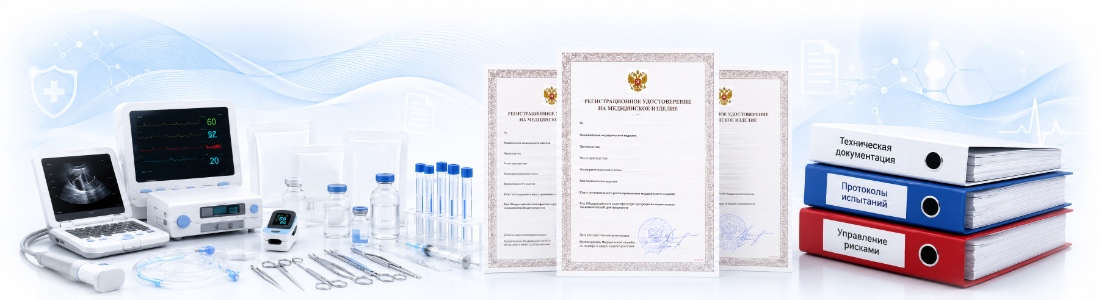
Before technical testing, it is important to clarify:
- Which models, versions and configurations will be included in the Russian registration scope;
- Whether all models have the same technical characteristics or require separate assessment;
- Which accessories, consumables or components are included in the device set;
- Whether the submitted sample corresponds to the documentation and intended use;
- Whether the device includes software, digital functions or connected equipment;
- Whether installation, calibration, training, special environment or manufacturer support is needed for testing;
- Whether existing foreign test reports can support the Russian testing route or only serve as supplementary evidence.
The document package usually includes:
- Technical documentation for the medical device;
- Operating documentation, instructions for use, user manual and service information where applicable;
- Device description, intended use and operating principle;
- List of models, variants, accessories and configurations;
- Photos, drawings, diagrams and specifications of the device;
- Existing test reports, certificates, declarations, IEC/ISO evidence or manufacturer validation reports;
- Software documentation, cybersecurity or digital function materials if relevant to the device;
- Samples in the quantity and configuration agreed with the testing laboratory.
* Sending “whatever sample is available” is a bad strategy. The tested sample must represent the medical device that will be submitted for registration in Russia. Otherwise, the protocol may look complete but work poorly in the dossier.
Procedure for conducting technical testing
The technical testing procedure should be managed as a controlled part of the registration project. The sequence matters. If the device is identified incorrectly, the indicators may be wrong. If the documentation is weak, the testing program may be unstable. If the sample does not match the declared model range, the protocol may not support the final dossier. The goal is not to produce any laboratory document. The goal is to produce a technical evidence block that can actually help the device move toward registration.
- We identify the medical device, its intended use, model range, configuration and initial registration logic;
- We determine the type of medical device and the risk class applicable to the registration strategy;
- We analyze the operating principle, design, technical characteristics and actual use conditions;
- We select applicable standards, indicators and testing parameters relevant to the specific device, not copied from a template;
- We review technical and operating documentation and assess whether it is sufficient for the testing route;
- Where necessary, we revise documentation before transferring it to the testing laboratory;
- Together with the testing laboratory, we prepare or coordinate the technical testing program;
- We determine the number of samples, sample configuration and delivery requirements for testing;
- We support technical testing in an accredited testing laboratory and control communication during the process;
- We receive the technical testing program and technical testing protocol;
- We check whether the final protocol is consistent with the device, documentation, testing program and further registration route;
- We connect the technical testing result with the toxicological, clinical and registration dossier stages where applicable.
* On paper, the procedure looks linear. In practice, the main risk is usually hidden before testing begins: wrong device qualification, weak indicators, inconsistent documents or a testing program that does not reflect the real product.
What is confirmed during technical testing
Technical testing is not performed for the sake of laboratory activity itself. Its purpose is to confirm that the medical device meets the declared characteristics, that its documentation is usable, and that the device can be safely and effectively used within the stated intended purpose. The more accurately this block is built, the stronger the registration project becomes.
The exact set of parameters depends on the device. For some products, the testing route may focus on mechanical characteristics, usability, dimensions, functional parameters or durability. For others, the scope may involve electrical safety, electromagnetic compatibility, software-related performance, measurement accuracy, alarm functions, environmental conditions, packaging or other technical indicators. A testing program must not be copied blindly from another device. It must fit the specific device submitted for registration.
- Compliance of the medical device and its documentation with applicable national or international standards;
- Completeness and objectivity of the testing requirements included in the device documentation;
- Correctness of declared technical characteristics and performance parameters;
- Possibility of using the operating documentation during real use of the medical device;
- Quality of the medical device within the technical parameters selected for the project;
- Safety of use within the confirmed technical characteristics;
- Consistency between tested samples, documentation, intended use and registration scope.
Important for foreign manufacturers: existing test reports from the EU, United States, China or another jurisdiction may be useful, but they must be checked against the exact Russian registration scope. The model range, standards, sample configuration, software version and intended use must correspond to the device submitted in Russia.
What the customer receives after technical testing
Properly conducted technical testing should not end with the vague feeling that “some tests were performed.” The customer must receive a clear set of results that can be used in the registration project. This is the difference between strong regulatory support and formal laboratory forwarding.
- Agreed list of technical testing indicators;
- Technical testing program;
- Technical testing protocol;
- Assessment of whether the protocol supports the registration route;
- Recommendations on how technical testing results should be connected with further toxicological, clinical and registration dossier materials;
- A clearer understanding of whether the current evidence is sufficient or whether the project needs additional correction.
* The practical value of technical testing is not only the protocol itself. The value is whether that protocol actually strengthens the dossier and helps the device move toward registration.
Common mistakes during technical testing
Most losses in technical testing do not happen because laboratories cannot work. They happen because the project is prepared incorrectly before the samples are transferred. This is why formally completed technical testing does not always mean that the registration project has moved closer to approval.
The most common mistakes include:
- Technical documentation does not match the actual device sample;
- The model range in the documentation is broader than the tested sample coverage;
- Testing indicators and standards are selected incorrectly or too formally;
- The laboratory receives a raw or internally inconsistent document package;
- The testing program does not reflect the real features of the specific device;
- Software versions, accessories or configurations are not properly covered;
- Existing foreign reports are used without checking whether they fit the Russian registration scope;
- The final protocol is received, but nobody checks whether it is strong enough for registration;
- The customer chooses the cheapest testing route and later pays for repeated testing or document reconstruction.
The most expensive mistake is not paying for technical testing. The most expensive mistake is paying for it twice because the first route was built without proper analysis. A weak protocol creates a false sense of progress. The customer believes the testing stage is complete, but later discovers that the document does not support the dossier strongly enough.
* The laboratory performs tests. The regulatory project needs more than that: it needs correct testing logic. Without this, a protocol can become another problem inside the dossier.
Why companies choose CIRMI
In technical testing projects, the value is not only access to a laboratory. The real value is correct preparation before the laboratory stage and regulatory control after it. Weak providers sell a protocol. Strong providers build the testing route so that the result actually supports registration and does not create another circle of problems for the customer.
CIRMI is the practical expert assistant that helps foreign and Russian manufacturers pass technical testing as part of a complete registration strategy. We determine the correct indicators, coordinate the laboratory route, check documentation and make sure the technical testing stage is connected with the registration dossier, not detached from it.

Please note: some providers present technical testing as a simple laboratory service: “send the device and everything will be ready.” This is exactly where future problems are created. Wrong indicators, weak testing program, inconsistent documentation and a protocol that does not support registration all lead to lost time, extra costs and repeated project reconstruction.
Typical weak approach CIRMI approach Selection of indicators A template list of indicators is used without proper analysis of the device. The tests may be completed, but the regulatory value of the protocol remains weak. We select indicators for the specific device, documentation and registration route. This reduces the risk of empty laboratory work and repeated testing. Documentation before laboratory stage The laboratory receives whatever documents are available, even if they are raw, inconsistent or do not match the sample. Problems appear after testing has already started. We check and, where necessary, revise technical and operating documentation before it goes to the laboratory. We do not launch a weak route knowingly. Testing program The testing program is treated as a formality. As a result, it poorly reflects the device and does not create a strong basis for the final protocol. We support the testing program so it is logical, justified and useful for registration, not only for formal laboratory work. Protocol control After receiving the protocol, the work is considered finished. Whether the protocol is suitable for registration is left to the customer. We control not only the testing process, but also the regulatory usefulness of the final protocol for the registration project. Risk of repeated testing The risk of repeated testing is ignored until the problem has already occurred. The customer pays for the second attempt with time and money. We identify typical failure points in advance: raw documents, wrong indicators, weak program, mismatch with documentation. This lowers the risk of repeated testing before the project starts. Connection with registration Technical testing is handled as a separate service without understanding the next registration step. The protocol is received, but what to do with it remains another problem for the customer. We manage technical testing as part of the complete registration logic. The customer receives not just a laboratory document, but a result built into the market entry route.
Cost and timeline of technical testing
The cost of technical testing depends not only on the fact of laboratory work. The budget is affected by the type of device, complexity, number of indicators, volume and quality of documentation, model range, number of configurations, need for sample preparation, software or electrical testing requirements and the overall strength of the initial document base. A realistic estimate starts with device analysis, not with a convenient price stated too early.
Indicative project guidance:
- Technical testing of medical devices usually starts from RUB 300,000;
- The estimated timeline usually starts from 20 working days;
- The final cost and timeline depend on the device, number of indicators, volume of documents, testing program complexity and number of models or modifications;
- If additional testing blocks are required, the budget and timeline must be recalculated according to the actual testing scope;
- If the initial documentation is weak, preliminary revision may be required before laboratory testing starts.
The final estimate depends on:
- Medical device type and risk profile;
- Technical complexity and operating principle;
- Number of tested indicators and applicable standards;
- Number of models, accessories and modifications;
- Need for electrical safety, electromagnetic compatibility, software or metrological assessment;
- Need for special installation, calibration or manufacturer support during testing;
- Quality of existing technical and operating documentation;
- Availability and relevance of existing foreign test reports.
* The cheapest technical testing route is not always the most profitable. If the route is weak from the beginning, early savings may later turn into repeated testing, additional document revision and lost months.
To receive a realistic estimate for your medical device, send a request or provide the initial materials for preliminary analysis. We will tell you which technical testing route fits your case and what it will realistically cost.
Risks of a formal approach to technical testing
Technical testing cannot be handled by the principle “just get a protocol.” A formally completed stage does not automatically mean that the project has a strong technical evidence base. If the testing program is weak, the documents do not match the sample, and the protocol does not reflect the real logic of the device, the problems will appear later in the registration route.
In practice, this leads to comments, timeline delays, repeated document revision, re-approval of indicators, resubmission of samples and another laboratory attempt. For the customer, this means direct loss of money, time and market momentum. For a foreign manufacturer entering Russia, this can also affect distributor confidence, launch planning and commercial negotiations.
The stronger strategy starts with a different question. Not “where can we get the cheapest protocol?” but “how should the technical testing stage be built so that it survives regulatory logic and moves the whole registration project forward?” This is the question that separates real regulatory support from primitive laboratory brokerage.
A weak technical testing route creates a false sense of security. The company believes the testing stage is complete, but later discovers that the result does not cover all models, does not match the documentation, does not support the declared intended use or fails to fit the final dossier. This is why technical testing must be managed as evidence, not as a receipt from a laboratory.
Since 2011, the expert department of CIRMI has professionally supported medical device registration projects, including technical testing and related documentation. During this time, we have studied the typical market mistakes that turn technical testing into an expensive formality without real value for registration. Due to a systematic approach, strong internal expertise and attention to detail, CIRMI helps build technical testing routes that actually support the registration of medical devices in Russia.
Accurate
selection of
indicatorsWe determine the required indicators from the start and prevent the project from losing months because of a weak program or wrong testing route.
Strong
testing
programWe prepare the program so it supports registration instead of turning technical testing into an empty laboratory formality.
Control
until final
protocolWe support the project until the final protocol, controlling documents, program, timing and communication with the laboratory.
Your advantages when working with CIRMI:
We do not send the device to the laboratory blindly
We do not start technical testing by the logic “let the laboratory figure it out.” First, we qualify the device, select indicators and check documentation so the testing route is working from the beginning.
We identify failure points early
We show in advance where the risks are connected with raw documents, wrong indicators, a weak program or mismatch between the sample and the description. This helps the customer avoid paying twice for the same mistake.
We connect the program and documents into one logic
Technical testing should not live separately from the dossier and the overall registration route. We build this stage so that the program, documentation and final protocol strengthen the project instead of contradicting each other.
We work for registration, not for paper
CIRMI does not sell only the fact of testing. Our task is to ensure that the final protocol actually moves the project forward and does not become an expensive but weak document.
We support foreign manufacturers entering Russia
For foreign manufacturers, exporters, authorized representatives and distributors, we help adapt existing technical evidence to the Russian registration route and determine when local technical testing is required.
Additional Services for Medical Devices in Russia
Additional services provided by CIRMI for medical device projects in Russia are not a random set of small side tasks. They are regulatory, documentary and strategic support services that often determine whether a medical device registration project moves smoothly or becomes stuck because of weak documentation, incorrect classification, poor route selection or unresolved mistakes made at the early stage.
For foreign manufacturers, these services are especially important. A company may have strong technical files, CE documentation, FDA-related materials, ISO certificates, clinical reports, test data or internal product documentation. But this does not mean that the file is automatically ready for Russian registration. Russian medical device regulation has its own logic, terminology, classification system, documentary expectations and interaction rules with Roszdravnadzor.
CIRMI acts as a practical regulatory partner for manufacturers, exporters, authorized representatives, importers and distributors working with medical devices in Russia. We help not only with full registration projects, but also with specific tasks that must be solved before, during or after registration: documentation development, dossier review, error correction, nomenclature classification, risk class assessment, official requests, import-related support, trademark-related tasks and representation of foreign companies in Russia.
The general legal framework for medical device circulation and registration in Russia is based on Federal Law No. 323-FZ and the current Rules for State Registration of Medical Devices approved by Resolution of the Government of the Russian Federation No. 1684 dated November 30, 2024. These acts form the main regulatory background for determining whether a product is a medical device, how the registration route should be built and what information must be supported by documentation.
For selection of the medical device type, the Russian nomenclature classification is applied under Order of the Ministry of Health of the Russian Federation No. 4n, together with the official Roszdravnadzor nomenclature classification service. For certain import-related tasks involving the manufacturer, authorized representative or person importing medical devices into Russia, Order of Roszdravnadzor No. 11020 may also be relevant.
For trademark-related tasks, the official procedures and services of Rospatent are used. Trademark registration is not the same as medical device registration, but in real market-entry projects the brand, device name, label, certificate data and registration strategy must not contradict each other.
* Not every additional service is a separate state procedure. Some tasks are regulatory preparation, documentation audit, classification, risk assessment, error correction or route planning. But ignoring these tasks is a poor strategy. Small mistakes at this stage often become expensive problems later.
Why additional services are not secondary
In medical device projects, the market often pays too much attention to the visible final action: filing an application, submitting documents or receiving a certificate. This is a weak view of the process. Many failures are created much earlier: when the product is classified incorrectly, when the intended use is written carelessly, when technical documentation does not match the real device, or when a foreign file is translated mechanically without adaptation to Russian regulatory logic.
Additional services close these weak points before they turn into formal comments, repeated testing, dossier reconstruction, delayed launch or disputes between the manufacturer, Russian representative, laboratory and regulator. In other words, these services are not “minor extras.” They are often the difference between a controlled registration project and a chaotic repair operation.
A serious provider does not sell additional services just to increase the invoice. A serious provider explains which task is really needed, why it matters, what risk it closes and how it connects with the final goal: safe, consistent and defensible market entry for a medical device in Russia.
Contents
- Documentation development and revision
- Audit, error correction and official requests
- Classification and regulatory qualification
- Import-related and representative support
- Trademark and brand-related support for medical devices
- Related project services
- Why companies choose CIRMI
- How the cost of additional services is formed
- Risks of a formal approach to additional services
Documentation development and revision
Medical device documentation is not a decorative attachment to the registration project. It is the foundation of the whole regulatory route. If technical documentation, operating documentation, instructions for use, labeling, model descriptions and composition data are weak or inconsistent, the project will not become strong simply because the application is filed.
Foreign manufacturers often underestimate this problem because their existing documentation may be good for another jurisdiction. But a European technical file, an American product file or an internal manufacturer specification may not be sufficient for Russia without regulatory adaptation. Russian registration requires consistency between the device name, intended use, model range, technical characteristics, operating documentation, tests, clinical evidence and registration dossier.
CIRMI can support the following documentation tasks:
- Development of documentation for medical device registration. We prepare or revise technical, operating and supporting documentation so that it works for the registration route, not only for an internal archive.
- Revision of existing documentation. We correct weak wording, contradictions between sections, inconsistencies in intended use, composition, model range, labeling, accessories, packaging and device description.
- Adaptation of foreign manufacturer files. We help foreign manufacturers convert existing documents into a Russian regulatory file that can be understood by laboratories, experts and the registration route.
- Preparation of documents for testing and expert review. We build the document package so it can support technical testing, toxicological testing, clinical evidence, dossier changes or other regulatory actions.
- Review of instructions for use and operating documentation. We check whether the instructions describe real use properly and whether they are consistent with registration claims and testing scope.
- Alignment of model lists and variants. We help prevent a common problem where the commercial model range, labels, technical documents and registration scope do not match.
Important for foreign manufacturers: translation alone is not regulatory adaptation. A document may be translated correctly but still fail to support the Russian route because the structure, terminology, risk logic, model scope or testing connection is wrong. A strong document package must be built for the specific registration route in Russia.
* The general legal background for medical device documentation and registration work is connected with Federal Law No. 323-FZ and Resolution of the Government of the Russian Federation No. 1684.
Audit, error correction and official requests
One of the most underestimated tasks in medical device regulation is not starting a clean project from the beginning, but repairing a weak project that has already been damaged by poor strategy, incomplete documents, wrong classification, weak testing logic or careless support. This is where many companies lose the most time and money.
A poor provider often promises that everything can still be “fixed quickly” without showing the real source of the problem. This is not a serious approach. A proper audit must first identify where the project is broken: in classification, intended use, documentation, testing route, authority documents, applicant structure, model range, foreign evidence, translation, dossier logic or regulatory strategy.
CIRMI can assist with:
- Full or partial audit of documentation. We review technical, operating, design and supporting documents not as a formality, but to identify real weaknesses that may affect registration.
- Correction of mistakes made by previous providers. We can enter the project when another consultant selected the wrong route, prepared a weak package, received comments or brought the project to a dead end.
- Preparation of clarifying and explanatory requests. We help formulate requests to Roszdravnadzor or other relevant bodies when an official position is needed before the project can safely move forward.
- Reconstruction of a weak project before a new attempt. Before relaunching the procedure, we help rebuild the documentation and regulatory logic so that the same failure is not repeated under a new filing.
- Analysis of comments and negative outcomes. If the project has already received objections, questions or a poor expert result, we identify whether the issue is technical, documentary, strategic or procedural.
Please note: not every damaged project can be repaired cheaply or quickly. Sometimes the correct answer is uncomfortable: the old route was wrong, the evidence is weak, documents contradict the device, or testing must be repeated. It is better to know this before spending more money on another weak attempt.
* A weak provider sells hope. A strong provider first shows where the project is broken and only then proposes a realistic correction route.
Classification and regulatory qualification
Incorrect classification is not a small technical mistake. It can distort the whole project: wrong medical device type, wrong risk class, wrong testing scope, wrong cost estimate, wrong timeline, weak clinical route and unstable dossier logic. This is especially dangerous for foreign manufacturers because the classification logic used in another jurisdiction may not directly match the Russian system.
In Russia, medical device type selection is connected with the nomenclature classification approved by Order of the Ministry of Health of the Russian Federation No. 4n and the official Roszdravnadzor nomenclature classification service. The risk class must also reflect the intended use, invasiveness, duration of contact, potential impact on the patient, technological features and regulatory logic of the device.
CIRMI can support the following classification tasks:
- Selection of the medical device type under the nomenclature classification. We help identify the correct medical device type using the official Russian classification logic, not a convenient but inaccurate commercial description.
- Assessment of the potential risk class. We evaluate the device based on intended use, construction, contact type, duration, invasiveness and patient-related risks.
- Regulatory consultation on the project route. We explain whether the task is likely to require registration, dossier changes, certificate changes, duplicate certificate, import notification, testing, documentation revision or another route.
- Primary qualification of borderline products. We support cases where it is not obvious whether the product is a medical device or where several classification options may seem possible at first glance.
- Review of classification used in foreign documentation. We compare foreign classification assumptions with Russian regulatory logic and identify where adaptation is needed.
Important: classification must not be selected only to make the project cheaper or easier. If the selected type or risk class does not reflect the real product, the project may look attractive at the quotation stage but become unstable during testing, expert review or dossier assessment.
* The Russian nomenclature classification of medical devices is connected with Order of the Ministry of Health of the Russian Federation No. 4n and the official Roszdravnadzor nomenclature classification service.
Import-related and representative support
Foreign medical device projects in Russia often require coordination between several parties: the manufacturer, Russian applicant, authorized representative, importer, distributor, testing laboratory and regulatory consultant. If this structure is not clear, even a technically strong device may face delays because no one understands who is authorized to sign, submit, import, explain or respond.
This is not a purely legal formality. The selected structure affects the registration route, powers of attorney, document flow, access to technical information, post-registration support, import notifications, communication with Roszdravnadzor and the commercial relationship between the manufacturer and Russian partners.
CIRMI can assist with:
- Representation of foreign manufacturers in Russia. We help build a practical working structure for interaction between the foreign manufacturer and the Russian regulatory route.
- Support for authorized representative arrangements. We help check whether the representative structure is suitable for the intended regulatory actions and document flow.
- Coordination of powers of attorney and authority documents. We identify what authority is required for signing, submission, communication and project support.
- Import-related regulatory support. We assist with tasks where the person importing medical devices into Russia must be aligned with regulatory requirements and project documentation.
- Communication logic between manufacturer, applicant and distributor. We help prevent conflicts where commercial parties expect the registration project to move, but authority documents or technical access are not properly arranged.
For foreign companies: the Russian market needs documentary discipline. It is not enough to have a distributor who is commercially interested in the product. The regulatory structure must show who has authority, who provides documents, who communicates with the regulator and who supports the device after registration.
* For certain import-related notification tasks, Order of Roszdravnadzor No. 11020 may be relevant. The correct approach depends on the actual role of the manufacturer, authorized representative and person importing the device into Russia.
Trademark and brand-related support for medical devices
Trademark and brand-related issues are not always part of medical device registration, but they often affect market entry. The device name, brand, model name, label, registration certificate data and commercial positioning must be handled carefully. A careless brand strategy can later create conflict between marketing, legal protection, registration documents and distributor agreements.
For foreign manufacturers entering Russia, trademark work may be especially important if the product will be promoted under a specific name, if several distributors may work with the product, or if the manufacturer wants to protect the brand from uncontrolled use by third parties.
CIRMI can help organize the task around:
- Trademark registration strategy for a medical device brand in Russia;
- Alignment between the product name used in marketing and the name used in registration documentation;
- Preliminary review of whether the brand-related task should be handled before or after the registration project;
- Coordination of regulatory and intellectual property considerations where the device name is commercially important;
- Interaction with the official Rospatent route where trademark registration is required.
Important: trademark registration does not replace medical device registration. These are different legal routes. But in a serious market-entry project, the brand and the registration file should not contradict each other. The name used in commercial materials must be checked against the regulatory strategy.
* The official state service for trademark registration is provided through Rospatent.
Related project services
In real medical device projects, related tasks appear constantly. They may look small, but they can block the whole project if ignored. A missing document, wrong model list, unclear applicant structure, inconsistent instruction for use or incorrect route assumption may delay registration as effectively as a formal refusal.
Additional related support may include:
- Preparation for testing routes. We help prepare the documentation and regulatory logic for technical testing, toxicological testing, clinical data assessment or human-subject clinical trials.
- Support for dossier changes or certificate changes. We help determine whether the issue requires changes to the registration dossier, changes to certificate data, a duplicate certificate or another route.
- Support for duplicate registration certificate projects. We help restore the certificate form when the original has been lost or damaged and the registration itself remains valid.
- Regulatory review before signing a commercial agreement. We can assess whether the project assumptions are realistic before the manufacturer, distributor or importer commits to an unrealistic timeline or budget.
- Preparation of explanations and supporting letters. We help formulate device-specific explanations when the dossier needs a clear bridge between manufacturer documents and Russian registration expectations.
- Project route review before market entry. We help identify what should be done first, what can be postponed and what must not be ignored.
* A related service is useful only when it is connected with the real project goal. A scattered set of disconnected actions creates activity, not progress.
Why companies choose CIRMI
The main mistake in additional services is treating them as minor administrative work. But these tasks often decide whether the main registration project will be stable. Weak documentation, wrong classification, unclear authority, poorly selected route or uncorrected earlier mistakes can destroy timing, increase costs and force the customer to repeat work that should have been done correctly from the start.
CIRMI treats additional services as part of the full regulatory logic of the project. We do not separate “small tasks” from the main goal. We ask a stricter question: will this action make the project stronger, safer and more predictable? If yes, we perform it properly. If not, we do not create artificial work for the customer.
Please note: some providers sell additional services as quick formalities: “we will select the code,” “we will fix the documents,” “we will send a request,” “we will represent the foreign company.” If there is no proper analysis behind these promises, the customer receives not a solution, but a new weak point where the project will lose time again.
Typical weak approach CIRMI approach Approach to related tasks Additional services are treated as minor side tasks and handled formally, without connection to the overall project logic. We treat related services as part of one regulatory route and connect them with the customer’s main market-entry goal. Quality of qualification The product type, risk class or regulatory route is selected by template or sales convenience rather than by the real device and its documents. We first analyze the device, documents and project goal, then recommend a specific action and explain why it is needed. Work with mistakes Weak providers avoid damaged projects or accept them without honest assessment, simply to sell another service. We can work with weak and disputed cases when we see a realistic path, and we directly explain where the problem is. Transparency The customer is sold an abstract “we will do it” without a clear explanation of what will be checked, corrected or prepared. We break the task into clear actions: what we check, what we correct, where the risk is and what the customer receives. Connection with registration The task is performed in isolation. Later the customer discovers that the result does not help the registration project. We connect additional services with the full project route so the result strengthens the registration file instead of creating another separate document.
How the cost of additional services is formed
The cost of additional services cannot be calculated by one universal price because the tasks are different in depth, risk and workload. A short classification consultation is not the same as repairing a failed registration project. A brief document review is not the same as reconstructing a technical file for a foreign manufacturer. A simple explanatory request is not the same as building a full representative and import-related structure.
The final cost usually depends on:
- Volume and quality of the initial documentation;
- Whether mistakes have already been made and how deep the correction must be;
- Urgency of the task and need for fast expert involvement;
- Whether the manufacturer is foreign and whether translations or authority documents are required;
- Whether the service is ordered separately or inside a full registration support project;
- Complexity of the device, model range and regulatory route;
- Need for interaction with laboratories, Roszdravnadzor, Rospatent or other external organizations;
- Expected output: consultation, written conclusion, revised documents, official request, full package or project route.
Practical point: many focused tasks can be estimated quickly after we review several key documents. But some related services make no sense as isolated actions because they are part of a larger regulatory problem. In such cases, a separate small service may be weaker than a proper project route.
To receive a realistic estimate, send the initial materials for preliminary review. We will tell you directly whether the issue can be solved as a focused additional service or whether it already requires a wider regulatory project.
Risks of a formal approach to additional services
Additional services become dangerous when they are performed formally. A selected nomenclature code that does not reflect the real device, a corrected instruction that still contradicts the technical documentation, a request sent without a clear legal question, or a representative structure without proper authority can all create the appearance of work without solving the actual problem.
In practice, a formal approach leads to repeated corrections, failed testing preparation, unstable dossier logic, delays in registration, disputes between project participants, additional expenses and loss of market-entry time. For a foreign manufacturer, this can also weaken distributor confidence and make the Russian project look unpredictable.
The stronger strategy is simple: first identify the real issue, then determine whether an additional service can solve it, then connect the result with the wider registration or market-entry route. If this sequence is broken, the service becomes another piece of paper rather than a useful result.
This is why CIRMI does not treat additional services as technical leftovers. We treat them as control points in the regulatory route. Done properly, they save time and protect the project. Done carelessly, they create new problems that will later have to be repaired.
Since 2011, the expert department of CIRMI has professionally supported medical device projects and related regulatory tasks in Russia. During this time, we have studied the typical market mistakes, weak points of documentation, classification problems and real reasons why even a small related task can block a large project. Due to a systematic approach, strong internal expertise and attention to detail, CIRMI supports both standard and complex additional services in the interests of manufacturers, authorized representatives, importers and distributors.
Accurate
regulatory
routeWe identify the real task from the start and prevent the project from losing time on unnecessary actions, weak assumptions or wrong routes.
Strong
documentation
baseWe prepare and revise documents so they support the project instead of creating new questions during the procedure.
Control
until practical
resultWe support the task until a usable result is achieved, controlling documents, route logic, risks and timing.
Your advantages when working with CIRMI:
We do not sell unnecessary actions just to increase the invoice
We do not expand the project with extra services simply because the customer may not see the difference between a truly necessary action and a beautiful but useless step. First, we identify the actual problem. Only then do we propose a specific service if it really makes sense.
We can work with weak cases and previous mistakes
We can join not only clean and convenient projects, but also situations where documents have already been damaged, the route was selected incorrectly or the customer is tired of empty promises. Our task in such cases is not to pretend that everything is fine, but to build a working correction route.
We identify risks before the work starts
We assess in advance where a task may become heavier, require more documents, take more time or increase the budget. This prevents false expectations and keeps additional services from becoming another source of lost time and money.
We connect related tasks into one project logic
When the customer has simultaneous questions about documents, classification, representative structure, trademark, changes, import or testing, we do not split the work into a chaotic set of unrelated services. We build one regulatory logic where each task strengthens the project.
We support foreign manufacturers entering Russia
For foreign manufacturers, exporters, authorized representatives, importers and distributors, CIRMI acts as a practical regulatory partner in Russia. We help adapt documents, clarify the route, structure responsibilities and prevent mistakes that may delay market entry.
Import of Medical Device Samples into Russia for Roszdravnadzor Registration
Import of medical device samples into Russia for Roszdravnadzor registration is not just a logistics or customs issue. For a foreign manufacturer, this is a separate regulatory stage that must be connected with the entire registration route: technical testing, toxicological testing, clinical evidence, dossier preparation and further submission to Roszdravnadzor.
The main mistake is to treat sample import as a simple shipment: “we will send several devices to Russia, and the consultant or laboratory will deal with the rest.” This is a weak approach. Before the samples cross the border, it is necessary to understand the real purpose of import, the registration stage, the applicant structure, the number of samples, the testing organizations, and whether the project requires an import notification or a different regulatory route.
CIRMI helps foreign manufacturers, exporters, authorized representatives, importers and distributors organize the import of medical device samples into Russia as part of a controlled registration project. We do not handle this stage as a detached paper form. We first qualify the case, check the purpose of import, prepare the information package and connect the import route with the future testing and registration process.
The current procedure for importing medical devices into Russia for the purpose of state registration is regulated by Order of the Ministry of Health of the Russian Federation No. 201n dated May 2, 2023. The general procedure for state registration of medical devices is currently governed by Resolution of the Government of the Russian Federation No. 1684 dated November 30, 2024.
In a typical case, when medical device samples are imported into Russia specifically for state registration, the key action is the submission of an import notification through the Russian government e-services portal before the actual import. However, this does not mean that every case can be solved by a simple notification. The correct route depends on the real purpose of import and the stage of the project.
* Many companies still use outdated language and call every such case an “import permit.” This is dangerous. In many registration projects, the proper route is not an old-style permit logic, but an import notification. In other cases, especially when the device is imported for changes to an existing registration dossier, the route may be different.
Important: import notification and import permit are not the same thing
Import notification is the current basic mechanism used in a typical route when medical device samples are imported into Russia for state registration. The applicant submits a notification of intention to import before the actual import through the personal account on the Russian government e-services portal.
Import permit is a different regulatory tool. It must not be automatically replaced by a notification. In some situations, especially when the device is imported not for initial state registration but for changes to documents contained in an existing registration dossier, the project may require another route.
A weak strategy looks simple: the customer hears familiar words about an “import permit,” starts collecting documents under the wrong logic and loses time. A strong strategy begins with proper route qualification before filing and before sending the samples to Russia.
Contents
- When an import notification is submitted and when an import permit may be required
- Basic document package for importing medical device samples
- Procedure for importing medical device samples into Russia
- Information included in the notification or application
- Common mistakes when importing medical device samples
- Why companies choose CIRMI
- Cost and timeline of import support
- Risks of choosing the wrong import route
When an import notification is submitted and when an import permit may be required
This is the key question of the entire import stage. The wrong answer here can damage the whole project. Some companies follow the old permit logic when the case should be handled through an import notification. Others assume that a notification can cover every possible situation and later face problems during testing, dossier changes or regulatory review.
An import notification is usually submitted when:
- The medical device is imported into Russia specifically for its state registration;
- The shipment concerns samples required for the registration route, including further testing or expert review;
- The applicant submits the notification before the actual import through the Russian government e-services portal;
- The project is still within the typical route for importing samples for initial registration.
An import permit may be required when:
- The medical device is imported for the purpose of making changes to documents contained in an existing registration dossier;
- Such changes require technical testing, toxicological testing, clinical trials or other procedures provided by the applicable route;
- The case is no longer a simple initial import of samples for state registration;
- The existing registration history, dossier status or testing need changes the regulatory nature of the import.
Separate import support may not be needed when:
- The medical device is already registered in Russia and is imported as a registered product, not as a sample for registration;
- The samples and production are already located inside Russia and no import for registration purposes is required;
- The import issue is already included in a wider registration support project and does not need a separate commercial service.
* The correct import route is determined not by the name of the service, but by the real purpose of import and the stage of the project. First qualify the case, then prepare the documents and move the samples.
Basic document package for importing medical device samples
A strong import stage starts not with shipping boxes, but with a correct document package. The issue is not only the number of files. The key issue is whether the information is internally consistent: device name, models, manufacturer, applicant, number of samples, purpose of import and testing route must all be aligned.
For foreign manufacturers, this is especially important because the commercial name, export documents, invoice description, manufacturer’s technical documentation and Russian registration scope may not automatically match. If these elements are inconsistent, the problem may appear later during testing or dossier preparation.
The basic package usually includes:
- Information about the applicant who initiates the state registration of the medical device in Russia;
- Information about the manufacturer, production site and the medical device itself;
- Device name, models, versions, configurations, accessories and number of samples to be imported;
- Power of attorney or authority documents if submission and support are performed through a representative or external consultant;
- Information about testing organizations where technical, toxicological or clinical work is planned, if this is already defined by the project route;
- Prepared import notification or another application package depending on the actual regulatory route.
Important for foreign manufacturers: the samples imported into Russia must correspond to the medical device that will be used in the registration route. Sending “available samples” without checking the registration scope is a weak tactic. If the wrong model, version or configuration is imported, the project may lose time before testing even begins.
* There is no universal template for every case. One sign of weak support is an attempt to launch the import process under an old familiar form without understanding what is actually happening with the registration dossier and testing route.
Procedure for importing medical device samples into Russia
The import procedure must be managed as part of the full registration project, not as a separate administrative action. The sequence matters: first the purpose and route are qualified, then the information is checked, then the notification or application package is prepared, and only after that the samples should move.
- We determine the real purpose of import and qualify whether the case follows the import notification route or requires another regulatory format;
- We check information about the medical device, models, sample quantity, manufacturer and applicant to remove contradictions before filing;
- We connect the import stage with the future technical, toxicological or clinical testing route, where applicable;
- We prepare the document package and form the import notification or another package according to the logic of the specific case;
- We support proper submission through the Russian government e-services portal and reduce the risk of formal errors before actual import;
- We support the stage until confirmation is received and provide the customer with a working package for further registration and testing steps.
* According to the practical route described by Roszdravnadzor, the notification of intention to import is submitted before import through the government e-services portal, and confirmation of receipt is sent to the applicant through the personal account within the prescribed administrative timeframe.
Information included in the notification or application
The most common practical problem is not that the customer has no data at all. The problem is that the data is incomplete, inconsistent or poorly connected with the future registration route. Strong filing is not just filling in fields. It is proper assembly of project information.
- Name of the medical device, models, versions, configurations and number of samples;
- Information about the applicant and manufacturer, including addresses and identifying data;
- Purpose of import and the intended use of the samples within the registration project;
- Information about testing organizations where technical, toxicological or clinical studies will be performed, if already defined;
- Information about the existing registration certificate if the project is related not to initial registration but to changes in the registration dossier;
- Representative or authority information if the submission is made through an authorized person.
Practical point: the same device may be described differently in a commercial invoice, manufacturer documentation, IFU, technical file and Russian registration materials. Before import, these differences must be checked. Otherwise, the import stage may create contradictions that later affect testing or dossier preparation.
Common mistakes when importing medical device samples
Companies usually lose time at this stage not because the procedure is impossible, but because the preparation is weak. Sample import is treated as a secondary formality, and then it turns out that the registration project has already started to slow down before testing even begins.
The most common mistakes include:
- Confusing import notification with import permit and choosing the wrong route from the start;
- Using outdated document logic without checking the current import procedure;
- Incorrectly stating models, versions, configurations, sample quantity or purpose of import;
- Importing samples that do not correspond to the future Russian registration scope;
- Failing to connect the import stage with testing, registration and dossier strategy;
- Understanding too late that the case no longer fits the typical notification scenario and requires a more complex route;
- Allowing logistics, customs, regulatory and testing parties to work separately without one project logic.
* The most expensive mistake here is not correcting a document. The most expensive mistake is shifting the entire registration timeline because the import stage was handled incorrectly: testing, filing, budget and market-entry date all begin to move.
Why companies choose CIRMI
In projects involving import of medical device samples, the value is not simply submitting a form. The value is correct route preparation before submission and proper connection with the registration project after it. Weak providers sell form completion. Strong providers build the import stage so that it supports registration and does not create a new circle of problems at the start.
CIRMI manages the import of medical device samples as part of the registration logic. We check whether the case requires an import notification, another route or additional dossier analysis. We also make sure that the imported samples, submitted information and further testing plan do not contradict each other.
Please note: some providers still sell the old story of an “import permit” as a universal answer for all cases. Later it becomes clear that one project needs a notification, another requires a permit-like route, and a third must first have its dossier and testing logic properly rebuilt. The customer loses time not because of customs, but because of poor case qualification.
Typical weak approach CIRMI approach Route qualification The provider treats any case under the old “import permit” formula and does not analyze what the project actually requires. We first determine whether the case follows an import notification route, another regulatory route or a more complex dossier and testing logic. Document approach The work is reduced to filling in a form without checking whether model, sample quantity, manufacturer and import purpose are consistent. We assemble the package so the key information is connected and does not damage the project after submission. Connection with registration Import is handled as a separate paper task, without connection to testing, dossier and further registration route. We manage import as part of one registration logic so samples, documents and future project stages stay consistent. Risk management Real errors appear after submission, when timelines shift, testing is delayed and documents must be rebuilt urgently. We identify typical weak points before submission so the import stage does not become the first failure point of the registration project. Budget and transparency The customer is first told that this is a small formality, then receives additional costs for clarifications, corrections, resubmission and extra support. We explain in advance when import support is included in full registration support and when it is a separate task with its own scope.
Cost and timeline of import support
The cost of import support depends not only on filling in a form. The budget depends on the project route: whether this is a typical import of samples for registration, whether additional document preparation is needed, whether there are difficulties with the applicant, manufacturer, sample quantity, testing organizations or further connection with the registration dossier.
Indicative project guidance:
- Separate support for importing medical device samples usually starts from RUB 40,000;
- The estimated timeline for this stage is usually about 2 weeks;
- If the project is handled by CIRMI as part of full state registration support, import of samples for registration is usually included in the consulting service and is not duplicated as a separate charge;
- The final cost depends on route complexity, document quality, urgency and whether additional regulatory analysis is required.
What should be understood about payment
The state service itself is not the same as professional regulatory support. The commercial cost is formed by route qualification, preparation of information, document checking, coordination with the registration project and control of proper submission. This is the work that prevents a small import issue from becoming a large registration delay.
* The cheapest import support is not always the most profitable. If the provider selects the wrong route and prepares a weak package, the customer loses not only money on correction, but also time across the whole registration project.
Risks of choosing the wrong import route
Medical device samples should not be imported under the logic “let us send them first and figure it out later.” In medical device projects, this type of improvisation usually affects not logistics, but the entire registration route: testing timelines, dossier consistency, budget and market-entry date.
In practice, the wrong import route can lead to repeated filing, disruption of the testing schedule, delays in the whole registration procedure and additional costs for correcting mistakes that could have been identified before the samples started moving. This is why the import stage must be managed not only by a logistics person or formal administrator, but by a specialist who understands the whole regulatory route.
A strong approach starts not with the question “where do we submit the paper?” but with the question “which import route fits this exact registration case and will not create problems later?”
For foreign manufacturers, this is especially important because the Russian registration project often depends on timely delivery of samples to accredited testing laboratories. If the import stage fails or is delayed, the entire sequence of technical, toxicological and clinical work may shift.
Since 2011, the expert department of CIRMI has professionally supported medical device registration projects and related regulatory procedures in Russia, including import of samples and preparation of supporting document packages. During this time, we have studied where the market most often confuses import notification, import permit and other related actions, losing weeks on unnecessary bureaucracy. Due to a systematic approach, strong internal expertise and attention to detail, CIRMI builds the import route so that it supports the registration project instead of slowing it down.
Clear
import
routeWe determine from the start what is required in your case: import notification, document package or another route, and prevent the project from entering unnecessary bureaucracy.
Strong
sample import
packageWe prepare the information package so that it is logical, complete and does not create avoidable questions during the procedure.
Support
until practical
resultWe control the route from information collection to the final working result and do not leave the customer alone with regulatory uncertainty.
Your advantages when working with CIRMI:
We do not confuse notification with permit
We immediately explain where an import notification applies today and where the old permit logic should not be used automatically. This is critical because the market still often relies on outdated assumptions.
We prepare the import package without useless bureaucracy
We do not overload the project with meaningless papers, but we also do not leave dangerous gaps. Our task is to prepare a package that actually fits the procedure and does not create another circle of problems for the customer.
We connect import with registration from the start
Import by itself has no value if it is not built into the full registration route. We show in advance how this stage connects with testing, documents and the next regulatory actions.
We work for project progress, not for a paper form
CIRMI does not replace regulatory work with a beautiful promise to “arrange import.” We build the import stage so that it actually supports registration and does not become a separate bureaucratic trap.
We support foreign manufacturers entering Russia
For foreign manufacturers, exporters, authorized representatives, importers and distributors, we help make the sample import stage understandable, controlled and connected with the wider market-entry project in Russia.
CENTER FOR TESTING AND REGISTRATION OF MEDICAL DEVICES
CIRMI provides regulatory support for medical device projects in Russia: registration with Roszdravnadzor, testing coordination, documentation preparation, dossier work and market-entry procedures. At the start, we define the route, scope, documents, testing stages, responsibilities, timeline and risks.
For foreign manufacturers, this is important. Files, certificates or clinical data prepared for another market do not automatically make the project ready for Russian registration. We adapt documents to Russian requirements and help prevent delays in testing, expert review or submission.
The client receives a clear plan, predictable stages, transparent deliverables and status updates. Decisions are agreed in advance.
We drive each project to a practical result and full control.
We align milestones, status, risks and roles before work starts.
We fix scope, timing and payment terms with no extras.
Your expert department for medical device registration in Russia







Адрес офиса:
115487, Moscow,
Nagatinskaya St., Bld. 16
Наши контакты:
+7 (495) 199-72-57 INFO@CIRMI.RU
Время работы:
Monday - Friday
from 09:00 AM to 06:00 PM
Transparent project control
We define milestones, deadlines and roles before work starts. You receive status updates, while key risks are discussed early and the project remains predictable.
Expert-led process
Each project is handled by a curator and a subject-matter expert. We review your documents, choose the suitable regulatory route and keep communication focused.
Clear contract terms
We agree the scope of work, project stages, payment schedule and expected timeline in advance. No hidden fees, no vague promises, only clear terms.
Get information about registration terms for your medical device
Send us your request by email to info@cirmi.ru,
or use the form on the right.
We will review your request and prepare a detailed response as quickly as possible.
Call us during business hours at our multi-line phone number +7 (495) 199-72-57
Business hours: 9:00 AM — 6:00 PM, Monday to Friday
By sending a request to the Expert Department of the Center for Testing and Registration of Medical Devices, LLC “CIRMI”, you agree to the terms of personal data processing.






















Get information about registration terms for your medical device
Send us your request by email to info@cirmi.ru,
or use the form on the right.
We will review your request and prepare a detailed response as quickly as possible.
Call us during business hours at our multi-line phone number +7 (495) 199-72-57
Business hours: 9:00 AM — 6:00 PM, Monday to Friday
By sending a request to the Expert Department of the Center for Testing and Registration of Medical Devices, LLC “CIRMI”, you agree to the terms of personal data processing.
Subscribe to our newsletter for useful updates on medical device registration in Russia!
© 2011–2026 ★ Центр испытаний и регистрации медицинских изделий / ООО «ЦИРМИ»
Находясь на данном сайте, вы соглашаетесь с условиями политики конфиденциальности.